
Category: Uncategorized

  • Why Premium Fuel Exists

    Why Premium Fuel Exists

    Why Premium Fuel Exists (And Whether Your Car Needs It) — Eli Masechaba
    Fuel Fundamentals

    Why Premium Fuel Exists (And Whether Your Car Needs It)

    The answer is not “premium is always better.” For many cars, it’s money straight down the drain. For others, running standard fuel is actively harming the engine. The difference is in the engineering.

    Eli Masechaba  |  Fuel Industry Specialist

    Premium fuel is one of the most misunderstood products at a South African forecourt. Drivers either assume it’s always worth paying for — marketing implying “premium” means “better” — or they dismiss it entirely as a scam. Neither position is correct. The real answer depends on one thing: what compression ratio and fuel management system your specific engine was designed for.

    Part 01

    What the Octane Number Actually Means

    Not energy. Not power. One thing only.

    93 RONSA inland standard grade
    95 RONSA coastal standard / inland premium
    97 RONSA super premium (Sasol et al.)

    The RON figure — Research Octane Number — measures a fuel’s resistance to auto-ignition under compression. That’s it. It does not measure energy content, cleanliness, or how fast the fuel burns. A 95 RON fuel contains almost exactly the same energy per litre as 93 RON. What it does differently is resist igniting until the spark plug tells it to.

    Why does that matter? Because petrol engines compress the fuel-air mixture before igniting it. The higher the compression, the hotter the mixture gets during that compression stroke — and a hot, highly compressed mixture will spontaneously ignite if the fuel isn’t resistant enough to hold on until the spark fires. The RON number is the measure of that resistance.

    The American labelling confusion: US fuel stations show numbers like 87, 89, and 93. These are AKI ratings — the average of RON and MON (Motor Octane Number). US 87 is roughly equivalent to South African 93 RON. This trips people up constantly when reading American automotive advice online or running imported vehicles. The methodology differs; the fuel quality is broadly comparable at the same tier.


    Part 02

    Knock and Pre-Ignition — What Goes Wrong

    Two related problems. Both destructive. Only one is correctable by the ECU.

    The Two Failure Modes of Incorrect Octane

    Knock (Detonation)

    The spark plug fires and a flame front begins spreading across the combustion chamber. In a correctly fuelled engine, this combustion is orderly and progressive. With insufficient octane, the remaining unburned fuel-air mixture ahead of the flame front — the “end-gas” — reaches its auto-ignition temperature before the flame arrives and ignites spontaneously. Two flame fronts collide. The resulting pressure spike produces the characteristic metallic “knocking” sound. The shock wave this creates hammers the piston crown, erodes the rings, and stresses the bearings.

    Modern engines have knock sensors — piezoelectric accelerometers on the block that detect the vibration signature of detonation. When knock is detected, the ECU retards ignition timing (fires the spark later) to reduce cylinder pressure and stop the knock. This works. But retarded timing also means less power and worse fuel economy. The ECU is not solving the problem; it is managing around it, continuously, at a performance cost.

    Pre-Ignition

    This is different and more dangerous. Pre-ignition is not the end-gas igniting from compression heat — it is the mixture igniting before the spark fires at all, triggered by a hot spot in the combustion chamber: a glowing carbon deposit, an overheated spark plug tip, or a sharp metal edge. Pre-ignition creates massive pressure on the piston while it is still travelling upward on the compression stroke — a direct mechanical collision between combustion force and piston motion. It produces no knock sound. The knock sensor cannot detect it. It destroys pistons rapidly and silently. Pre-ignition risk increases with sustained high load (highway overtaking, climbing a pass) in a low-octane-fuelled high-compression engine, and with carbon deposits that have built up from running the wrong fuel over time.


    Part 03

    Does Your Car Actually Need Premium?

    Check your fuel cap or owner’s manual. The answer is already there.

    Engine designers specify a minimum octane rating for a reason. That rating is the threshold at which the engine’s compression ratio and ignition timing map will run correctly without the knock sensor having to intervene. Whether paying more for premium fuel produces any benefit depends entirely on where your engine sits relative to that threshold.

    Engine Type — Does Premium Fuel Help?
    Yes

    High-compression performance engines (specified for 95 RON or higher)

    Engines designed around compression ratios of 11:1 and above — found in turbocharged performance cars, most BMWs, Mercedes-AMGs, Audis, and modern performance Japanese vehicles — are calibrated on 95 or 97 RON fuel. Their ignition timing maps are optimised for that octane. Running 93 RON forces the knock sensor to retard timing continuously under load. The result is measurably less power and higher fuel consumption. You are paying less per litre and getting a worse outcome. For these engines, premium is not optional — it is the correct fuel.

    Yes

    Modern turbocharged engines with knock sensor advance maps

    Many modern turbocharged engines — including increasingly common small-displacement turbos in mainstream vehicles like the Ford EcoBoost, VW/Audi TSI family, and Mazda Skyactiv-X — have ECU maps that actively advance ignition timing when higher-octane fuel is detected (via knock sensor absence). These engines are designed to opportunistically extract more performance from premium fuel. They will run safely on 93 RON but perform noticeably better on 95 RON, with real-world power and efficiency gains. The owner’s manual typically says “minimum 91 RON, recommended 95 RON” — the distinction is meaningful.

    No Gain

    Low-compression naturally aspirated engines designed for 93 RON

    A naturally aspirated engine with a compression ratio of 9:1 to 10:1 — the majority of budget sedans, older hatchbacks, entry-level bakkies, and most high-mileage daily drivers in South Africa — runs well within the knock threshold on 93 RON. The knock sensor never needs to intervene. Putting 95 RON in this engine does not allow more ignition advance; the ECU has no instruction to extract more timing from higher octane. The additional octane resistance goes entirely unused. You are paying a premium for a property your engine has no mechanism to exploit.

    Check First

    Older, high-mileage engines with carbon deposits

    An engine with significant combustion chamber carbon buildup has effectively raised its compression ratio (deposits occupy volume) and introduced potential hot spots for pre-ignition. An engine that ran happily on 93 RON when new may benefit from stepping to 95 RON once it has 150,000 km on it and the combustion chambers are carboned up. This is not a universal rule, but it is a real-world scenario worth understanding. The symptom is pinging or hesitation under load on a car that previously had none. First eliminate carbon buildup as the cause before assuming you need premium permanently.

    Why South Africa Sells Different Grades Inland vs Coastal

    At higher altitude, atmospheric pressure is lower. Lower atmospheric pressure means less air mass entering the cylinder per stroke — which effectively reduces the tendency for the compressed charge to knock. Gauteng sits at approximately 1,500 metres above sea level. The reduced knock tendency at altitude means 93 RON is adequate for engines that would require 95 RON at sea level. Cape Town and Durban are at or near sea level — full atmospheric density, higher effective compression, higher knock tendency. This is why 95 RON is the standard minimum grade at coastal forecourts, not a premium product. The physics of altitude directly determines which octane grade is appropriate for a given location.

    Practically: if you buy a car in Gauteng on 93 RON and drive to Cape Town, your engine’s knock sensor will compensate. If you are in Cape Town long-term, switch to 95 RON. Conversely, if you are from the coast and your car is specified for 95 RON, do not downgrade to 93 RON when refuelling inland simply because it is cheaper — your engine is still doing the same work; altitude reduces knock propensity but does not eliminate the octane requirement for a high-compression engine.

    The Short Answer

    Check what your engine is specified for — it is printed inside the fuel flap or in the owner’s manual. If it says 95 RON minimum, that is what it needs. Running 93 RON will not destroy the engine immediately, but the knock sensor will continuously trade away power and efficiency to compensate, and you will get less from the car than it was designed to deliver.

    If the specification says 93 RON, premium fuel offers you nothing measurable. The marketing suggesting otherwise is not supported by the engineering. The engine has no mechanism to use the additional octane resistance, and the money spent on the price differential is genuinely wasted.

    The one exception worth knowing: if your engine has developed a knock or ping under load that wasn’t there before, try 95 RON before spending money on other diagnoses. Carbon deposits raising effective compression are a real phenomenon on older, high-mileage engines, and the fix is sometimes simply a higher-octane fuel — or a proper engine clean to address the root cause.

    Read the Fuel Cap.

    It tells you exactly what your engine needs. Everything else is marketing.

    Eli Masechaba  |  Fuel Industry Specialist  |  South Africa

  • What Actually Happens Inside a Fuel Tank?

    What Actually Happens Inside a Fuel Tank?

    What Actually Happens Inside a Fuel Tank? — Eli Masechaba
    Fuel Fundamentals

    What Actually Happens Inside a Fuel Tank?

    Most people think a fuel tank is a passive container. It isn’t. It’s an active chemical environment where fuel ages, water accumulates, biological organisms grow, and sediment forms — and understanding it changes how you think about fuel quality.

    Eli Masechaba  |  Fuel Industry Specialist

    A fuel tank — whether it’s the 60-litre polymer shell under your bakkie or a 50,000-litre underground steel vessel beneath a forecourt — is not simply a bucket. From the moment fuel enters it, a set of physical and chemical processes begins. Some are slow. Some depend on temperature. Some require water. Some are biological. None of them are good for your engine or your equipment. This is what’s actually happening in there.

    Topic 01

    Condensation — The Myth, The Mechanism, and When It’s Actually Real

    The advice to “keep your tank full to prevent condensation” is decades old. The engineering behind it has changed substantially.

    ~0.95/°CPetrol thermal expansion (per 1,000 L per °C)
    <200 ppmMax water in diesel per SANS 342
    ~0.5% volWater threshold for E10 phase separation

    The condensation advice originates from an era of carburettor-fed, vented fuel tanks. In those vehicles, the vapour space above the fuel communicated directly with the atmosphere through a simple vent. On a warm day, humid air would enter. At night, temperatures dropped, the dew point was reached, and water vapour in that air condensed onto the cold metal walls of the tank. With a half-empty tank, there was more vapour space, more air volume, and more condensation potential. Keeping the tank full left less space for air. The advice was physically correct for that era.

    Modern fuel-injected vehicles have sealed evaporative emission control systems (EVAP). The vapour space above the fuel is connected not to the open atmosphere, but to a charcoal canister — a sealed vessel of activated carbon that captures hydrocarbon vapour. The tank breathes through this canister, and the atmosphere inside is saturated with hydrocarbon vapour, not humid outside air. This fundamentally changes the condensation picture.

    Condensation — What’s True, What’s Outdated, What Still Matters
    Outdated

    “Keep your tank full to prevent condensation” (in modern vehicles)

    On any post-1990s fuel-injected vehicle with an intact EVAP system, the vapour space above the fuel is not occupied by humid atmospheric air. It contains hydrocarbon vapour. Water vapour from the outside cannot condense from what isn’t there. A properly sealed modern vehicle tank does not meaningfully accumulate condensation water regardless of fuel level. This advice is a legacy instruction that has largely outlived the engineering conditions that made it valid.

    Caveat: if the fuel cap seal is degraded, the EVAP charcoal canister is saturated or cracked, or the purge valve fails in the open position, atmospheric air can enter — and the condensation mechanism becomes relevant again. This is not theoretical; aged vehicles with worn seals are genuinely susceptible.

    Still Valid

    “Keep your tank full” for long-term storage

    For classic cars, seasonal equipment, generators, and vehicles stored for months at a time, a full tank remains the correct advice — but for a different reason than condensation. A nearly empty tank exposes more of the fuel surface area to oxidation from residual air in the system, accelerating gum and varnish formation. On steel tanks (common on older vehicles and fuel equipment), the exposed metal above the fuel line is vulnerable to surface rust. A full tank minimises both. The reason changed; the conclusion didn’t.

    Genuinely Real

    Condensation in underground storage tanks

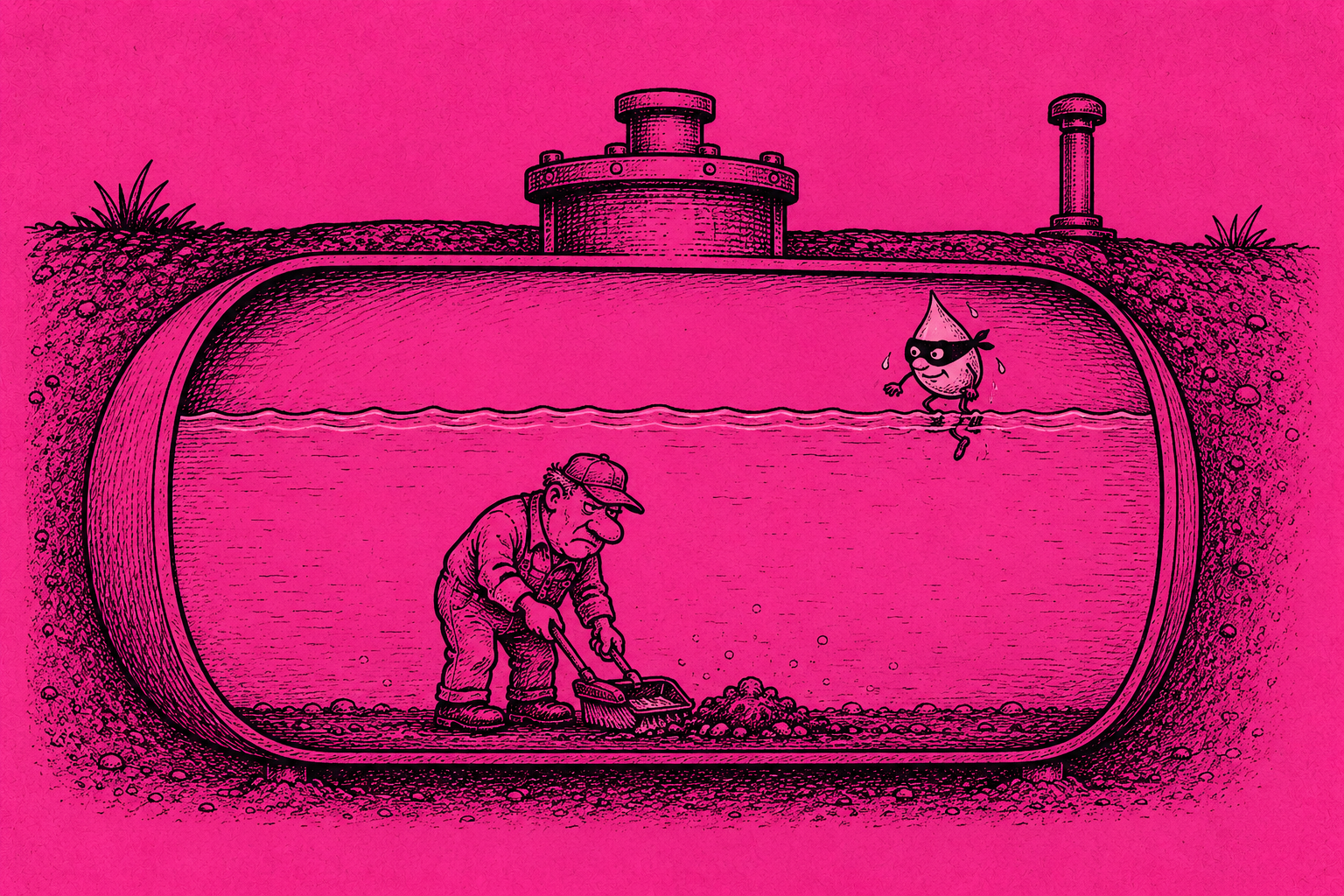
    Underground storage tanks (USTs) at fuel stations are not sealed systems in the same way. They breathe through pressure/vacuum vents and vapour recovery lines, and the large volume of vapour space — thousands of litres — is subject to temperature cycling. Soil temperature at tank depth varies seasonally; the liquid fuel temperature varies with delivery cycles (incoming fuel at a different temperature to stored fuel). This cycling drives real condensation at the tank walls and roof. Water bottom accumulation in USTs is a routine management concern, not a theoretical one. Every operating forecourt draws periodic water samples from the lowest point of each tank precisely because this happens.

    Underappreciated

    Ethanol absorbs water — and this is more important than condensation

    South African petrol grades now contain ethanol (up to 10% in E10 blends). Ethanol is hygroscopic — it actively absorbs water vapour from any gas-phase contact, not just from condensation events. Over time, even in a properly sealed modern tank, trace moisture absorbed by the ethanol component accumulates. When the dissolved water content in E10 petrol reaches approximately 0.3–0.5% by volume, phase separation occurs: the ethanol drops out of solution along with the water, creating a distinct water-ethanol layer at the bottom of the tank. This layer has very low energy content and is directly corrosive to ferrous components. Phase separation is a slow-burn fuel contamination mechanism that condensation advice alone does nothing to address.


    Topic 02

    Water Contamination — Where It Comes From and What It Does

    Water and fuel are chemically incompatible. The ways water finds its way in — and what happens next — are more varied than most people expect.

    ~30°COptimal diesel bug growth temperature
    ~550°CSteam flash temp at diesel injector tip
    10–40°CFull viable range for microbial growth

    Petrol and diesel are both hydrophobic — they do not dissolve in water, and water does not dissolve in them. When water enters a fuel tank, it does one of two things: it either sinks to the lowest point as free water (because water is denser than both fuels), or it remains suspended as microscopic droplets in a fuel-water emulsion, which forms when the tank is agitated. In either state, water in a fuel tank causes a cascade of problems with escalating severity.

    Water Entry Points and the Damage Chain

    How Water Gets In

    The entry routes are multiple. In vehicle tanks: phase separation from ethanol-blend fuels (described above); trace water delivered in contaminated fuel from the supply chain; degraded fuel cap seals allowing rainwater ingress; and in older vehicles, direct condensation. In underground storage tanks at fuel stations: condensation from temperature cycling; water delivered with fuel (settling in tanker bottoms if tanks are not properly maintained by the distributor); cracked fill point seals allowing surface water entry during heavy rain; and in coastal areas, elevated ambient humidity increasing condensation rates at vent lines. South Africa’s summer rainfall patterns — intense, short downpours followed by high humidity — create periodic elevated water ingress risk at above-ground fill points.

    What Free Water Does to Petrol Systems

    In petrol, free water sitting at the tank bottom is initially inert — but only until the ethanol in E10 petrol contacts it. Ethanol preferentially migrates to the water layer, causing phase separation. The resulting water-ethanol mixture (often 50–80% ethanol by the time equilibrium is reached) is then drawn into the fuel system if the pickup tube reaches the bottom of the tank. This mixture has a very low octane equivalent, very low energy content, and high water content. Combustion is rough, engine management systems compensate erratically, and the acidic by-products of incomplete combustion accelerate metal corrosion in the fuel injectors and combustion chamber. The water-ethanol layer also causes severe corrosion of steel tank walls and ferrous fuel system components.

    What Free Water Does to Diesel Systems

    Water in diesel has three distinct damage mechanisms. First: emulsified water droplets reaching a high-pressure common-rail injector (operating at 1,600–2,500 bar) flash to steam instantaneously when injected into the hot combustion chamber. The volumetric expansion of water to steam at these temperatures is explosive — the steam hammer effect erosively damages the injector nozzle tip at the microscopic level, degrading the spray pattern permanently. Second: water at the diesel-fuel interface creates the ideal environment for Hormoconis resinae and associated bacteria — the organisms collectively called diesel bug — which live exactly at that interface. Third: water accelerates oxidative corrosion of all ferrous surfaces in contact with diesel, including tank walls, pipework, and filter housings.

    Diesel Bug — Microbial Contamination

    Diesel bug is not folklore. Hormoconis resinae is a filamentous fungus that metabolises the hydrocarbon compounds in diesel as a carbon source, living at the fuel-water interface where it has access to both the hydrocarbons it feeds on and the water it needs. It produces a visible black-brown biomass — a slimy mat — along with organic acids as metabolic by-products. These acids are directly corrosive to tank walls. The biofilm physically blocks fuel filters, causing pressure drop warnings and fuel starvation. Treatment involves a registered biocide (such as Biobor JF, a 2-ethylhexyl borate compound commonly used in commercial diesel applications) combined with complete removal of the free water layer that sustains the colony. Removing the biofilm without removing the water achieves nothing; it regrows from the surviving water-resident cells within weeks. South Africa’s warm, humid climate — particularly in coastal regions and during summer — is closer to optimal for diesel bug growth than the cool North Sea conditions where much of the early diesel bug research was conducted.


    Topic 03

    Sediment — What Accumulates at the Bottom of Every Tank

    Fuel is not a clean liquid when it arrives, and it doesn’t stay clean while it sits. Sediment has multiple origins, and each has a different implication for the fuel system downstream.

    10–30 µmPrimary diesel fuel filter pore size
    2–5 µmSecondary (fine) diesel filter pore size
    <24 mg/LMax particulate content in SANS 342 diesel

    The phrase “fuel sediment” covers a surprisingly wide range of materials, each with a different origin and different consequences. In an underground storage tank, sediment accumulates at the rate of grams per day from multiple simultaneous sources. In a vehicle fuel tank, the sediment load is lower but no less consequential — because the entire sediment burden eventually passes through a filter system calibrated to protect injectors that cost thousands of Rands each.

    The Four Main Sediment Categories

    Inorganic Particulates — Rust, Scale, and Pipeline Debris

    Steel tanks — older vehicle tanks, underground storage tanks, farm storage tanks — corrode from the inside wherever water and oxygen coexist. The rust particles (iron oxides, primarily Fe₂O₃ and Fe₃O₄) shed from the tank walls and settle on the tank floor. During a busy forecourt’s refuelling cycle, when 30,000 litres of fresh fuel arrives via road tanker, the agitation disturbs years of settled sediment and suspends it throughout the tank. Every vehicle that refuels in the 15–30 minutes after a tanker delivery is drawing slightly more sediment-laden fuel than usual. This is not a catastrophic problem for vehicles with intact fuel filters — but it is exactly why fuel filter replacement intervals exist. Pipeline scale (mineral deposits from water in the supply chain) and metal fines from pump wear also contribute to inorganic sediment loads.

    Wax Precipitation in Diesel

    Diesel fuel contains paraffin wax compounds — long-chain alkanes that are in solution at normal operating temperatures. As temperature drops, these waxes crystallise out of solution. The temperature at which wax crystals first appear is called the Cloud Point (because the fuel turns visibly cloudy). The temperature at which the wax crystals form a gel that prevents fuel flow is the Cold Filter Plugging Point (CFPP). South African summer diesel is typically not formulated for sub-zero CFPP performance — the local climate doesn’t demand it for most of the country. However, vehicles travelling to Lesotho, the high Drakensberg, or the Northern Cape in winter can encounter temperatures approaching the CFPP of local diesel formulations. Wax crystals are a reversible sediment — warming the fuel dissolves them — but in a blocked filter at the roadside in the Karoo at 2 a.m., this is cold comfort.

    Biological Sludge from Diesel Bug

    The biofilm produced by Hormoconis resinae and associated bacteria is a thick, dark, gelatinous material — heavier than diesel, so it settles to the bottom and collects in sumps. It is highly effective at blocking fuel filters and fuel-water separators. Unlike rust sediment, which passes through filtration and accumulates on filter media over weeks, biological sludge can form a coherent mass that physically bridges across filter elements and causes sudden, near-total fuel flow restriction. Tanks with an established diesel bug colony require mechanical cleaning — not just biocide treatment — to remove the accumulated biomass before it migrates downstream.

    Oxidative Gum and Polymer Residue

    Fuel ageing (covered in detail in the next section) produces gum and varnish from the oxidation of unstable hydrocarbon compounds. These oxidation products are semi-solid to solid at fuel system temperatures, and they either remain dissolved in the fuel until combustion (where they produce hard carbon deposits on injectors, intake valves, and combustion chamber surfaces) or precipitate as visible sediment in the tank bottom. Petrol is more prone to gum formation than diesel. Ethanol-blend petrols are particularly susceptible because ethanol oxidises to acetaldehyde and acetic acid — contributing to both gum formation and increased fuel acidity. Sediment from fuel oxidation has a characteristic dark brown to black colour and a resinous texture quite distinct from rust or biological sludge.


    Topic 04

    Fuel Ageing — The Chemistry of Slow Deterioration

    Fuel is not shelf-stable. It begins degrading the moment it leaves the refinery, and the timeline is shorter than most people assume.

    30–90Days before petrol begins degrading noticeably
    Up to 5%FAME (biodiesel) content in SA diesel (SANS 342)
    6–12 moMaximum storage before diesel treatment required

    Both petrol and diesel are complex mixtures of hundreds of different hydrocarbon compounds. They are not chemically stable indefinitely. The refinery adds antioxidant packages — compounds such as hindered phenols (butylated hydroxytoluene, for example) and phenylenediamines — to slow oxidative degradation. These additives are consumed over time. Once depleted, the underlying hydrocarbons begin reacting with dissolved oxygen, UV light, heat, and water to form progressively more complex and less desirable products.

    How Petrol and Diesel Age Differently

    Petrol Oxidation — Gum, Varnish, and Peroxides

    Petrol contains a significant proportion of olefins (alkenes) — unsaturated hydrocarbons with double carbon bonds that are particularly reactive with oxygen. Oxidation of olefins produces hydroperoxides, then alcohols, aldehydes, carboxylic acids, and ultimately gum (a collective term for the high-molecular-weight polymerisation products of oxidative degradation). The ASTM D381 test measures existent gum in mg per 100 ml of fuel. Fresh petrol from a refinery typically shows washed gum content well below 5 mg/100 ml. After 6–12 months of storage without stabiliser, this figure increases significantly, and the gum deposits on intake components, injector tips, and combustion chamber surfaces as a brown-to-black varnish. Gum deposits on fuel injectors alter the spray pattern, causing incomplete atomisation and rich-burn misfires.

    Petrol Vapour Pressure Change and Ethanol Evaporation

    Petrol is a blend formulated to a specific Reid Vapour Pressure (RVP) for each season and region — the vapour pressure determines cold-start performance and hot-weather vapour lock resistance. As petrol ages in storage, the lightest, most volatile fractions (C₄–C₅ compounds, butanes, pentanes) evaporate preferentially from even a nominally sealed tank. This shifts the RVP of the remaining fuel and changes its octane characteristics. Ethanol — which has lower vapour pressure than the lightest petrol fractions but much higher water affinity — becomes proportionally more concentrated as the tank ages and the light fractions leave. Stale petrol in a generator or classic car can exhibit hard starting, rough running, and poor throttle response entirely from this vapour pressure shift, independent of any gum formation.

    Diesel Oxidation and FAME Instability

    Diesel is generally more oxidatively stable than petrol over a given storage period — its heavier, more saturated hydrocarbon composition is less reactive with oxygen than petrol’s olefin content. However, South African diesel supplied under SANS 342 contains up to 5% FAME (Fatty Acid Methyl Esters — biodiesel derived from vegetable oils). FAME is substantially less oxidatively stable than mineral diesel. FAME oxidises to form peroxides and then acidic degradation products; it polymerises to form gum-like residues; and it is strongly hygroscopic, drawing water moisture into the diesel blend. Diesel with a high FAME content has a practical storage life of 6–12 months without antioxidant treatment. Mineral diesel alone can be stored for 12–24 months in appropriate conditions. The blended product falls between these limits — closer to the lower end if stored in warm, partially full tanks with any water present.

    Thermal Degradation in High-Pressure Injection Systems

    Modern common-rail diesel injection systems expose the fuel to extreme pressure and temperature cycling — fuel is pressurised to 1,600–2,500 bar in the high-pressure pump, partially injected, and the remainder returns to the tank via a return line at elevated temperature (50–80°C above ambient in some systems). This return fuel is thermally stressed: dissolved oxygen has reacted, peroxides have formed, and the antioxidant package has been partially consumed by the heat history. This fuel cycles through the system repeatedly before being used. High-pressure common-rail systems therefore create a micro-environment of accelerated fuel ageing in their own return circuits — the fuel in a vehicle that has sat unused for a month, then been started several times, may be more degraded than its calendar age would suggest.

    South Africa: Warm Temperatures Accelerate Everything

    Fuel degradation rates are strongly temperature-dependent. The Arrhenius relationship in chemistry states that reaction rates roughly double for every 10°C increase in temperature. South African ambient temperatures — particularly in the Northern Cape, Lowveld, and Gauteng summer — regularly exceed 35–40°C. Fuel stored in above-ground tanks exposed to direct solar radiation can reach temperatures of 45–55°C. At these temperatures, oxidative degradation, gum formation, and microbial growth all proceed at rates 4–8× faster than they would in a cool European storage environment. Fuel quality standards and storage guidelines developed in temperate climates require recalibration for the South African context. A 12-month storage rating for diesel in Germany may represent 3–4 months in a sun-exposed farm tank on the Highveld.

    This is particularly consequential for farms, construction sites, and any operation using bulk diesel storage. Tanks that are slow to turn over — where fuel sits for months between top-ups — need active fuel management: regular water draws, fuel testing, and stabiliser additives to compensate for what the climate accelerates.


    Topic 05

    Why Fuel Stations Monitor Their Underground Tanks

    The tank under a forecourt is the most tightly monitored vessel in retail fuel. There are good reasons for every sensor in it.

    ~0.38 L/hrMinimum leak detection threshold (reference standard)
    ±1–2 mmATG probe accuracy for water bottom measurement
    ~0.95 LVolume change per 1,000 L per 1°C temperature shift

    An operating service station in South Africa may hold 100,000–200,000 litres of fuel in underground tanks at any given time. These tanks are below the forecourt, typically at a depth of 1–3 metres, and the public — driving over them daily — has no awareness of the processes being actively managed beneath the surface. Automatic Tank Gauging (ATG) systems — the most common being Veeder-Root TLS series equipment — continuously monitor every parameter that matters. None of this monitoring is optional, and none of it is bureaucratic box-ticking.

    What Underground Tank Monitoring Actually Tracks — and Why

    Leak Detection

    A slow leak from an underground storage tank — as small as 0.4 litres per hour — will not be visible at surface level. Petrol and diesel are both classified as Light Non-Aqueous Phase Liquids (LNAPLs): they float on groundwater, spread laterally as a free-phase layer, and contaminate groundwater at concentrations that are harmful to human health at parts-per-billion levels. Benzene, a component of petrol, is a known carcinogen with a drinking water standard of 1 microgram per litre (1 ppb) under South African regulations. A slow UST leak, undetected for a year, can contaminate a groundwater plume extending hundreds of metres from the site. ATG systems perform statistical leak detection tests during overnight periods of no dispensing — comparing expected fuel volume against measured volume, corrected for temperature, to identify anomalous losses. Under South Africa’s National Environmental Management Act (NEMA) and local authority requirements, operators bear liability for groundwater contamination. The monitoring exists because the legal and environmental consequences of not detecting a leak are severe and expensive.

    Temperature Compensation for Accurate Inventory

    Petrol and diesel expand and contract measurably with temperature. Petrol’s coefficient of thermal expansion is approximately 0.00095 per °C — which means a 50,000-litre tank will show an apparent volume change of nearly 500 litres across a 10°C temperature swing, with no fuel having entered or left. Without temperature correction, inventory reconciliation is impossible. ATG systems record fuel temperature continuously and report volumes corrected to a reference temperature of 15°C — the international standard. This temperature-corrected volume is what is billed to motorists, what is declared to SARS, and what is used to verify tanker deliveries. A tanker delivering 30,000 litres of fuel at 32°C on a summer afternoon is actually delivering slightly less than 30,000 litres at 15°C standard. The ATG system reconciles this automatically. Without it, operators would be systematically overbilling or underbilling on every transaction depending on the season.

    Water Bottom Monitoring

    ATG probes include water-sensing floats or capacitance sensors at the bottom of the measurement probe. These detect free water accumulation in the tank sump with millimetre accuracy. A rising water bottom reading is an early warning signal for several problems simultaneously: possible tank or fill-point seal failure allowing surface water ingress; condensation accumulation requiring scheduled drain-off; or delivery of contaminated product from a supplier whose own tank or tanker has a water issue. Industry practice sets maximum acceptable water bottoms — typically 25–50 mm depending on tank diameter and product type — above which the operator must arrange tank draining before water reaches the draw-off point and enters the dispenser. ATG water alarms are among the most actionable early warnings in day-to-day forecourt management.

    Delivery Verification and Theft Detection

    South Africa has a well-documented fuel theft problem at multiple points in the supply chain — from tanker meter manipulation to underground tank bypass and site-level dispensing fraud. ATG reconciliation is the primary technical defence. Every tanker delivery is logged against the ATG’s before-delivery and after-delivery readings. Discrepancies outside acceptable tolerance (typically ±0.5% of delivery volume) trigger investigation. Similarly, daily sales reconciliation — dispensed volume from pump meters versus ATG tank level drop — identifies unexplained losses that may indicate product diversion, meter tampering, or tank integrity issues. Operators using manual dipstick measurement instead of ATG systems are significantly more vulnerable to loss-in-transit claims and dispenser-level fraud, because manual measurement is too imprecise for early discrepancy detection at commercially meaningful volumes.

    Overfill and Vapour Space Management

    Underground tanks are not filled to capacity. A vapour space — typically 5–10% of tank volume — is maintained above the fuel level to accommodate thermal expansion of the fuel and to provide a buffer for vapour recovery systems. Overfilling a UST forces product into the vapour recovery lines, the fill point sump, and potentially into the soil at the fill adapter — a regulatory violation and an environmental incident. ATG systems provide high-level alarms during deliveries that warn tanker operators before the tank approaches capacity. In a busy forecourt taking multiple deliveries per week across several product tanks, the ATG’s overfill protection function runs continuously in the background of every delivery. It is not glamorous engineering. It is the kind of engineering that prevents expensive, legally consequential incidents.

    Underground Tank Monitoring: The Numbers That Matter
    Leak Detection Standard Reference standard: detect 0.38 L/hr leak with ≥95% probability during a statistical test period. South African regulatory requirements align broadly with international best practice under NEMA and local authority bylaws.
    Groundwater Risk Threshold Benzene contamination of groundwater above 1 µg/L (1 ppb) triggers remediation obligations under South African drinking water standards. A 0.4 L/hr petrol leak, undetected for 30 days, represents approximately 280 litres of fuel released.
    Temperature Reference All fuel volumes reported at 15°C standard for billing, inventory, and regulatory purposes. ATG systems correct in real time across typical South African operating range of 10–45°C.
    Water Bottom Limit (typical) Maximum acceptable free water: 25–50 mm depth in tank sump, depending on operator specification and product type. Above this threshold, scheduled drain-off is required before next delivery.
    Inventory Reconciliation Tolerance Delivery discrepancy threshold: typically ±0.3–0.5% of delivery volume. Exceedances trigger investigation. Daily sales reconciliation should balance to within ±0.5% across dispensers.
    Vapour Space Minimum 5% vapour space maintained above product level for thermal expansion and vapour recovery. High-level alarm set at 95% capacity to prevent overfill during deliveries.

    What the Tank Is Actually Doing

    A fuel tank is a chemically dynamic environment. From the moment fuel enters it, the following processes run simultaneously and continuously:

    • Oxidation Unstable hydrocarbons react with dissolved oxygen, producing gum, varnish, and acidic degradation products. Temperature accelerates this significantly — a major concern in the South African climate.
    • Water Accumulation Free water settles to the bottom via condensation, phase separation from ethanol blends, or supply chain contamination. Even small quantities — tens of millilitres — can initiate biological growth in diesel.
    • Microbial Growth In diesel tanks with any free water present, Hormoconis resinae and associated bacteria colonise the fuel-water interface within weeks under warm conditions. The resulting biofilm blocks filters and corrodes metal surfaces.
    • Sediment Accumulation Rust, pipeline scale, wax crystals, biological sludge, and oxidative gum settle progressively at the tank bottom. Every agitation event — a delivery, a vehicle bump, a pump cycle — resuspends some of this sediment.
    • Evaporation The lightest fuel fractions leave through the vapour space, shifting the fuel’s vapour pressure and octane/cetane characteristics over time. Ethanol concentrations in the liquid phase increase as lighter fractions preferentially leave.

    The engineering response to all of this — in vehicle tanks, it’s the multi-stage fuel filter system and the EVAP canister; in underground storage tanks, it’s the ATG, the sump monitoring, the water draw procedures, and the delivery reconciliation protocols — exists precisely because ignoring these processes is not an option. The processes are always running. The question is only whether you are managing them.

    The Fuel Doesn’t Wait for You.

    Condensation, oxidation, microbial growth, and sediment accumulation don’t pause between fill-ups. Understanding what is happening inside your tank — whether in a vehicle, a generator, or a bulk storage installation — is the first step toward managing it before it becomes a breakdown, a contamination event, or an environmental liability.

    Eli Masechaba  |  Fuel Industry Specialist  |  South Africa

  • Why Do Diesel Engines Last Longer Than Petrol Engines?

    Why Do Diesel Engines Last Longer Than Petrol Engines?

    Why Do Diesel Engines Last Longer Than Petrol Engines? — Eli Masechaba
    Engine Science

    Why Do Diesel Engines Last Longer Than Petrol Engines?

    It gets argued about in every workshop, every forecourt, every fleet manager’s office. Here’s what the engineering actually says — including why the answer is more complicated for modern diesels than it used to be.

    Eli Masechaba  |  Fuel Industry Specialist

    Ask any long-distance trucker, any commercial fleet operator, or any farmer running a Land Cruiser 70 series across the Karoo, and they’ll tell you the same thing: diesel engines just don’t die. The question worth asking is not whether this is true — it demonstrably is, in many cases — but why it’s true, when it stops being true, and what the modern emissions era has done to a reputation that used to be almost unassailable.

    Reason 01

    Higher Compression Ratios Force Better Engineering

    Diesel engines are overbuilt by necessity — and that overbuild is exactly what makes them last.

    16:1–23:1Diesel compression ratio
    8:1–13:1Petrol compression ratio
    ~2×Mass of diesel internals vs petrol equivalent

    Diesel engines compress air to ratios between 16:1 and 23:1 — roughly double that of a comparable petrol engine. This is not optional; compression ignition (the entire premise of how a diesel works) requires this extreme pressure to heat the air charge to approximately 500°C, at which point the injected diesel auto-ignites. No spark plug, no external ignition source. Just physics.

    The consequence of generating these pressures inside the engine, hundreds of times per minute, is that every internal component must be designed to survive forces that would destroy a petrol engine’s internals in minutes. This is where the durability story really begins — not in philosophy, but in metallurgy and engineering tolerances.

    What This Means for Engine Longevity

    Thicker Cylinder Walls and Block Casting

    Diesel engine blocks are cast with substantially more material — thicker walls, heavier webs between cylinders, more robust main bearing journals. This isn’t a design choice for aesthetics; it’s a structural requirement. The peak cylinder pressures in a diesel during combustion regularly exceed 180–200 bar. A petrol engine typically sees 50–80 bar. The diesel block is essentially a pressure vessel, and it’s engineered accordingly. That same mass that makes diesel engines heavy is the mass that makes them last.

    Forged or Cast Steel Crankshafts as Standard

    Petrol engines, particularly smaller displacement ones, frequently use cast iron or nodular iron crankshafts — adequate for the forces involved. Most diesel engines — even relatively modest passenger car units like the 2.0-litre common-rail found in countless bakkies and SUVs — use forged steel crankshafts as standard equipment. Forging aligns the grain structure of the steel, producing a crankshaft that resists fatigue cracking over tens of millions of cycles. The crank simply doesn’t fail from cyclic stress the way a cast equivalent eventually would.

    Stronger Pistons and Connecting Rods

    Diesel pistons are typically forged aluminium alloy with steel or cast iron ring lands, designed to handle the extreme heat of compression ignition. They are heavier, more thermally robust, and built with tighter geometric tolerances than petrol pistons. Connecting rods in diesel engines are similarly heavier — often I-beam section forgings with wider big-end bearings. The bearing surface area is larger, which distributes load and reduces bearing pressure. This is directly why diesel bearings last longer: less force per unit area, over every single combustion cycle.


    Reason 02

    Lower RPM Means Fewer Wear Cycles — Full Stop

    Engine wear is a function of cycles, not just kilometres. Diesel engines accumulate fewer cycles per kilometre, and far fewer over a lifetime.

    ~2,000Diesel highway RPM
    ~3,200Petrol highway RPM
    500,000+Typical diesel lifespan (km) in SA fleet use

    This is the most mechanically straightforward reason diesel engines last longer, and it is often underappreciated. Engine wear — of piston rings against cylinder walls, of camshaft lobes against followers, of crankshaft journals against bearings — is directly proportional to the number of times these components move against each other under load. More RPM means more contact cycles per minute. Fewer RPM means fewer.

    At a steady 120 km/h on the N1 to Cape Town, a typical diesel bakkie cruises at around 2,000–2,200 RPM. A similarly-sized petrol vehicle at the same speed will be turning 3,000–3,500 RPM. Over a 1,400 km Johannesburg–Cape Town run (a perfectly normal South African long haul), that difference compounds into tens of millions of additional wear cycles for the petrol engine.

    The Cumulative Maths of Wear

    Redline Comparison and Operating Range

    A diesel passenger car or light commercial vehicle typically has a redline of 4,000–4,500 RPM. A petrol equivalent redlines at 6,000–7,500 RPM. This means diesel engines are almost never operating near their mechanical stress limits during normal driving. A diesel running at 2,200 RPM is at roughly 50% of its design ceiling. A petrol engine at 3,500 RPM is at 50–60% of its ceiling. But the absolute difference — 1,300 fewer RPM, sustained over every hour of highway driving — produces a dramatically different wear rate across 300,000 km of service life.

    Total Cycle Count Over Engine Lifetime

    Consider a diesel engine reaching 500,000 km — not unusual for a Toyota Hilux 2.4 GD-6 in fleet use, or a Isuzu D-Max 1.9 DDTi running highway kilometres. At an average of 2,200 RPM over that distance, the engine has completed approximately 2.2 billion combustion cycles. A petrol engine covering the same distance at 3,200 RPM average has completed over 3 billion cycles — roughly 40% more wear events on every sliding surface in the engine. The difference in component wear at end of life is not marginal; it is structural.

    Valve Train and Timing Component Wear

    Every camshaft revolution produces valve lift events — opening and closing each intake and exhaust valve against spring pressure. Cam lobes press against followers, followers press against valve stems, springs compress and release. This happens once every two crankshaft revolutions. Lower RPM directly reduces the rate at which this wear accumulates. Diesel cam followers, tappets, and valve seats see proportionally fewer stress cycles per kilometre. In practice, diesel timing chains and valve train components frequently outlast the engine overhaul interval in fleet use, whereas high-revving petrol engines commonly require valve stem seal replacement and cam follower service well before equivalent mileage.


    Reason 03

    Engine Design Differences That Work in Diesel’s Favour

    Beyond compression and RPM, several fundamental design differences give diesel engines a structural durability advantage.

    The longevity gap between diesel and petrol is not entirely explained by compression ratios and RPM. The complete picture includes several design-level choices — some deliberate, some incidental — that consistently benefit diesel engine lifespan.

    Design Factors That Add Service Life

    Diesel Fuel Has Inherent Lubricity

    Diesel fuel is not merely a combustion medium — it is also a lubricant for the injection system. The fuel pump and injector internals in a diesel engine are lubricated entirely by the diesel flowing through them. Diesel’s natural lubricity (measured as HFRR wear scar diameter — typically below 460 µm for on-road diesel) keeps these precision components operating with minimal wear across hundreds of thousands of kilometres. Petrol has no meaningful lubricity; it is essentially a solvent relative to diesel. This is one reason why petrol in a diesel engine is so catastrophically damaging (the injection system is instantly deprived of lubrication), and it’s why diesel fuel quality has such a direct impact on pump and injector lifespan.

    No Ignition System to Wear Out

    Diesel engines have no spark plugs, no ignition coils, no distributors, and no high-tension ignition leads. These components in a petrol engine are consumables with finite service lives — spark plugs every 30,000–100,000 km, coils that fail with age, plug boots that crack and arcover. They are also failure vectors: a misfiring cylinder from a failed spark plug means raw petrol entering the exhaust, fouling the oxygen sensor and catalytic converter. In a diesel, combustion is initiated entirely by the physics of compression and fuel injection timing. One entire system — the ignition system — simply does not exist, and therefore cannot wear out or fail.

    Higher Thermal Efficiency = Less Waste Heat in the Engine

    Diesel engines convert approximately 40–45% of fuel energy into useful work. Petrol engines convert roughly 28–35%. The thermal efficiency gap is significant: the energy that isn’t converted to work has to go somewhere, and in both cases it goes into heat — in the coolant, the oil, and the exhaust. A petrol engine, being less thermally efficient, dumps more waste heat per combustion cycle into the engine structure. Sustained high temperatures accelerate oil degradation, gasket failure, thermal fatigue in aluminium components, and bearing wear. Diesel engines run their components cooler relative to the energy being processed, which contributes directly to component longevity.

    Larger Displacement per Power Output

    Diesel engines produce their torque at low RPM and typically have larger displacements relative to their power output compared to petrol equivalents. A 2.4-litre diesel producing 110 kW is not a stressed engine — it is a lightly loaded one. The same 110 kW from a 1.4-litre turbocharged petrol engine (increasingly common in the South African new-car market) means that engine is working at or near its design limits during normal driving. Mechanical stress, thermal load, and component fatigue all scale with how hard the engine is working relative to its design capacity. An unstressed diesel architecture compounds its advantages; a stressed petrol architecture compounds its vulnerabilities.


    Reason 04

    Modern Diesel Myths Worth Addressing

    Not everything you’ve heard about diesel longevity is accurate. Some of it was never true. Some of it used to be true and no longer is.

    The diesel engine’s reputation for indestructibility was earned by a previous generation of technology — mechanical injection pumps, minimal emissions equipment, simple valvetrains, and robust indirect-injection chambers. Modern passenger car diesels have changed substantially. Here’s where the received wisdom needs updating.

    Diesel Myths — Tested Against Engineering Reality
    Nuanced

    “Diesel engines always outlast petrol engines”

    In heavy commercial applications — trucks, buses, generators, agricultural equipment — this is reliably true. In modern passenger cars and light SUVs, particularly those produced post-2010 with full Euro 5/6 emissions equipment, the gap is substantially smaller and in some cases reversed. The emissions hardware that modern diesels carry (DPF, EGR, SCR/AdBlue) introduces failure modes that simply didn’t exist on older engines, and some of these failures are expensive enough to make a diesel less economical to maintain than a petrol equivalent over a 10-year ownership period. The raw engine block lasts. The systems around it often don’t.

    Busted

    “Diesel requires less maintenance”

    Older mechanical diesel engines did have simpler maintenance requirements. Modern common-rail diesels are among the most maintenance-sensitive vehicles on the market. Injectors operating at 1,800–2,200 bar require clean, correctly-spec’d fuel. DPFs require active regeneration (which itself can cause oil dilution problems). EGR valves clog with carbon and require periodic cleaning. Timing belts on many diesel engines (as opposed to chains) require replacement at strict intervals — a missed belt service can cause catastrophic interference engine damage. Modern diesel maintenance intervals are often shorter than equivalent petrol engines, and the consequences of missing them are typically more severe.

    Nuanced

    “Diesel is always cheaper to run”

    In South Africa, diesel has been priced above petrol per litre for several years, partly driven by the international diesel demand premium. The efficiency advantage of diesel (roughly 25–30% better fuel economy versus a comparable petrol engine) still produces a running cost advantage over long distances and high annual mileage. But for urban drivers covering under 15,000 km per year on short trips, the efficiency savings don’t offset diesel’s higher service costs and emissions equipment maintenance. The break-even calculation has changed, and it depends heavily on driving pattern.

    Largely True

    “High-mileage diesel bakkies are worth buying”

    For pre-2015 mechanical or early common-rail diesel bakkies — Hilux 3.0 D-4D, older Isuzu KB 3.0 TDI, Navara 2.5 dCi — high mileage (250,000–400,000 km) with a full service history is genuinely less concerning than the equivalent in a petrol vehicle. These are engines from an era before DPF fitment, with proven long-service histories across South African fleet use. Post-2016 models with DPF systems require more scrutiny: DPF condition, EGR service history, and injector health need to be verified, not assumed. The old “diesel mileage doesn’t matter” rule applies fully to the older generation and partially to newer ones.


    Reason 05

    Why Some Modern Diesels Don’t Outlast Older Ones

    Emissions legislation changed the diesel engine. Not all of those changes were friendly to longevity.

    The emissions controls added to diesel engines from approximately 2009 onward — Euro 5, and then Euro 6 standards (which South Africa adopted incrementally under SANS 342 and national vehicle emissions standards) — transformed diesel from a simple, robust combustion machine into one of the most complex powertrains in the passenger car market. The core engine is still durable. What surrounds it is not.

    How Emissions Technology Chips Away at Diesel Longevity

    DPF Oil Dilution — The Silent Engine Killer

    The diesel particulate filter captures soot from combustion and must be periodically “regenerated” — a process where the ECU injects additional fuel late in the combustion cycle to raise exhaust temperatures and burn off the accumulated soot (above ~600°C). This works well on highway driving. On short urban trips, the exhaust never reaches regeneration temperature, and the DPF fills with soot. When the engine finally attempts a forced regeneration, some of the post-injection fuel washes past the piston rings and into the engine oil. This is called oil dilution. Diesel in engine oil reduces viscosity and degrades lubrication. Repeated dilution events accelerate bearing wear, cam lobe wear, and ring/liner wear — the exact mechanisms that make diesel engines last. The DPF, designed to protect the environment, inadvertently undermines the engine’s longevity when the vehicle is predominantly used for short trips.

    EGR Carbon Buildup on Intake Manifolds

    Exhaust gas recirculation (EGR) feeds a portion of exhaust gases back into the intake manifold to reduce combustion temperatures and lower NOx emissions. The problem is that exhaust gas carries oil vapour and soot. Over time, these deposit as a thick, hard carbon layer inside the intake manifold, on the intake ports, and on the intake valves themselves. Carbon buildup reduces airflow into cylinders, causing the ECU to compensate with richer fuelling, which increases soot production, which makes the problem worse. Some diesel engines require intake manifold removal and chemical cleaning at 80,000–120,000 km — a job that costs R3,000–R8,000 at a workshop. This is not a lifespan-ending problem, but it is a maintenance requirement that didn’t exist on pre-EGR engines.

    High-Pressure Common-Rail Injectors Are Precision Components

    Modern common-rail injection systems operate at pressures between 1,600 and 2,500 bar. The injectors are machined to tolerances measured in microns. They are extraordinarily precise and extraordinarily sensitive to fuel quality and contamination. A single tank of substandard diesel — lower lubricity, water contamination, or particulate contamination — can begin scoring injector internals. Injector wear manifests as poor spray pattern atomisation, which produces incomplete combustion, higher soot output, accelerated DPF loading, and rough running. Each injector on a four-cylinder diesel can cost R3,000–R15,000 to replace. A full set of four is a significant repair bill that older mechanical injection engines simply did not generate.

    Turbocharger: Every Modern Diesel Has One

    Older diesel engines — the naturally aspirated indirect-injection designs that ran until the late 1990s and early 2000s — frequently had no turbocharger. Modern common-rail diesel passenger vehicles are all turbocharged, and many use variable-geometry turbines (VGT) that actively adjust vane angles to optimise boost across the RPM range. These are complex, heat-exposed mechanical components with actuator mechanisms that can stick with carbon deposits. Turbocharger replacement on a modern diesel runs R8,000–R30,000 depending on the application. An engine that might otherwise reach 500,000 km can be written off economically by a turbo failure at 180,000 km. The raw engine block outlasted the emission systems and ancillaries — a hollow victory.

    The South African Context: Fuel Quality Matters More Than You Think

    South Africa completed its transition to 50ppm ultra-low sulphur diesel (ULSD) under SANS 342, which brought fuel quality broadly in line with Euro 5 standards. This is good news for emissions equipment longevity. The less publicised consequence is that reducing sulphur content also reduces diesel’s natural lubricity — sulphur compounds are lubricity agents. ULSD requires lubricity additives to compensate, and reputable refiners and distributors include these. However, diesel purchased from informal resellers, certain rural areas, or storage tanks with contamination risk may not meet lubricity specifications. In a modern high-pressure common-rail injection system, this difference is measurable in injector and pump wear rates within tens of thousands of kilometres.

    This is also why using a reputable fuel source — a branded forecourt with a known supply chain — is not just a brand loyalty choice for commercial fleet operators. It is a direct maintenance decision with engineering consequences.


    Diesel vs Petrol Longevity: What the Engineering Actually Shows

    Factor Diesel Petrol Who Wins
    Compression ratio 16:1–23:1 — forces heavy, robust internals 8:1–13:1 — lighter components, adequate for lower loads Diesel
    Highway RPM ~2,000–2,200 RPM — far below redline ~3,000–3,500 RPM — closer to design limits Diesel
    Fuel lubricity Diesel lubricates injection system by design Petrol is a solvent — no lubrication Diesel
    Ignition system wear None — no spark plugs, coils, or leads Spark plugs, coils, leads — consumable wear items Diesel
    Thermal efficiency 40–45% — less waste heat in the engine 28–35% — more waste heat per combustion event Diesel
    DPF / EGR complexity Present on all post-2009 passenger car diesels — significant failure risk 3-way catalyst only — simpler and more reliable Petrol
    Short-trip suitability Poor — DPF cannot regenerate; oil dilution risk Fine — no minimum operating temperature requirements for emissions hardware Petrol
    Injector service cost R3,000–R15,000 per injector (high-pressure CRDi) R500–R2,000 per injector (petrol direct injection) Petrol
    Expected engine lifespan (fleet use) 400,000–800,000 km for commercial units; 250,000–400,000 km for modern passenger car 200,000–350,000 km typical; some modern turbos less Diesel

    The Honest Answer

    Diesel engines last longer than petrol engines because they are physically overbuilt relative to their operating loads, run at lower RPM (accumulating fewer wear cycles per kilometre), use a fuel that inherently lubricates their injection systems, and operate at higher thermal efficiency (producing less destructive waste heat). These advantages are real, measurable, and consistent across decades of fleet data.

    The honest qualification is that modern passenger car diesels carry emissions systems that introduce new failure modes, sensitivity to fuel quality, and maintenance requirements that older diesel engines never had. The engine block will likely still outlast a petrol equivalent. Whether the complete vehicle does depends heavily on:

    • Use Case Highway-heavy, high-mileage driving gives diesel every advantage. Short urban trips systematically undermine it.
    • Fuel Quality South African ULSD from reputable sources is adequate. Contaminated or low-lubricity fuel accelerates injector wear at a rate that can offset all longevity gains.
    • Maintenance DPF health, EGR cleanliness, injector condition, and oil change intervals. Modern diesel rewards discipline and punishes neglect more severely than petrol does.
    • Vehicle Age Pre-DPF diesels (pre-2009 broadly) earn the indestructible reputation without qualification. Post-2016 diesels with full Euro 5/6 equipment need more nuanced evaluation.

    A well-maintained modern diesel in appropriate use still outlasts a petrol equivalent. The margin has narrowed. The conditions attached to it have grown. Understanding those conditions is the difference between buying a reliable workhorse and an expensive disappointment.

    Know What You’re Buying.

    Whether you’re running a fleet, buying a high-mileage bakkie, or choosing between a petrol and diesel for your next vehicle, the engineering details in this article are the details that determine total cost of ownership. The longevity is real — and so are the caveats.

    Eli Masechaba  |  Fuel Industry Specialist  |  South Africa

  • Why Fuel Costs What It Costs in South Africa

    Why Fuel Costs What It Costs in South Africa

    By Eli Masechaba | Fuel Industry Business Specialist

    Why Fuel Costs What It Costs in South Africa

    One of the most common questions I hear from clients, fleet operators and everyday motorists is surprisingly simple: “Who actually decides the fuel price?”

    The answer is far more scientific than most people expect.

    As someone working within the fuel industry through my partnership with FuelZone, and as a Wits graduate with a deep interest in how energy markets shape our economy, I’ve learned that fuel pricing is not driven by a single company, politician, refinery or service station.

    Instead, the final number you see on the pump is the result of a carefully structured system involving global fuel markets, international shipping, currency fluctuations, infrastructure costs, regulatory mechanisms and national levies.

    Once you understand the moving parts, fuel prices begin to make a lot more sense.

    The Biggest Piece: The Fuel Itself

    The biggest misconception I encounter is that fuel prices are based purely on crude oil.

    In reality, South Africa largely works from an import-parity pricing model known as the Basic Fuel Price (BFP). Rather than asking what it costs to produce fuel locally, the system effectively calculates what it would cost to purchase refined fuel on international markets and bring it into South Africa.

    That international benchmark becomes the foundation of the final pump price.

    Fuel prices in South Africa are influenced by international fuel markets long before they reach a local filling station.
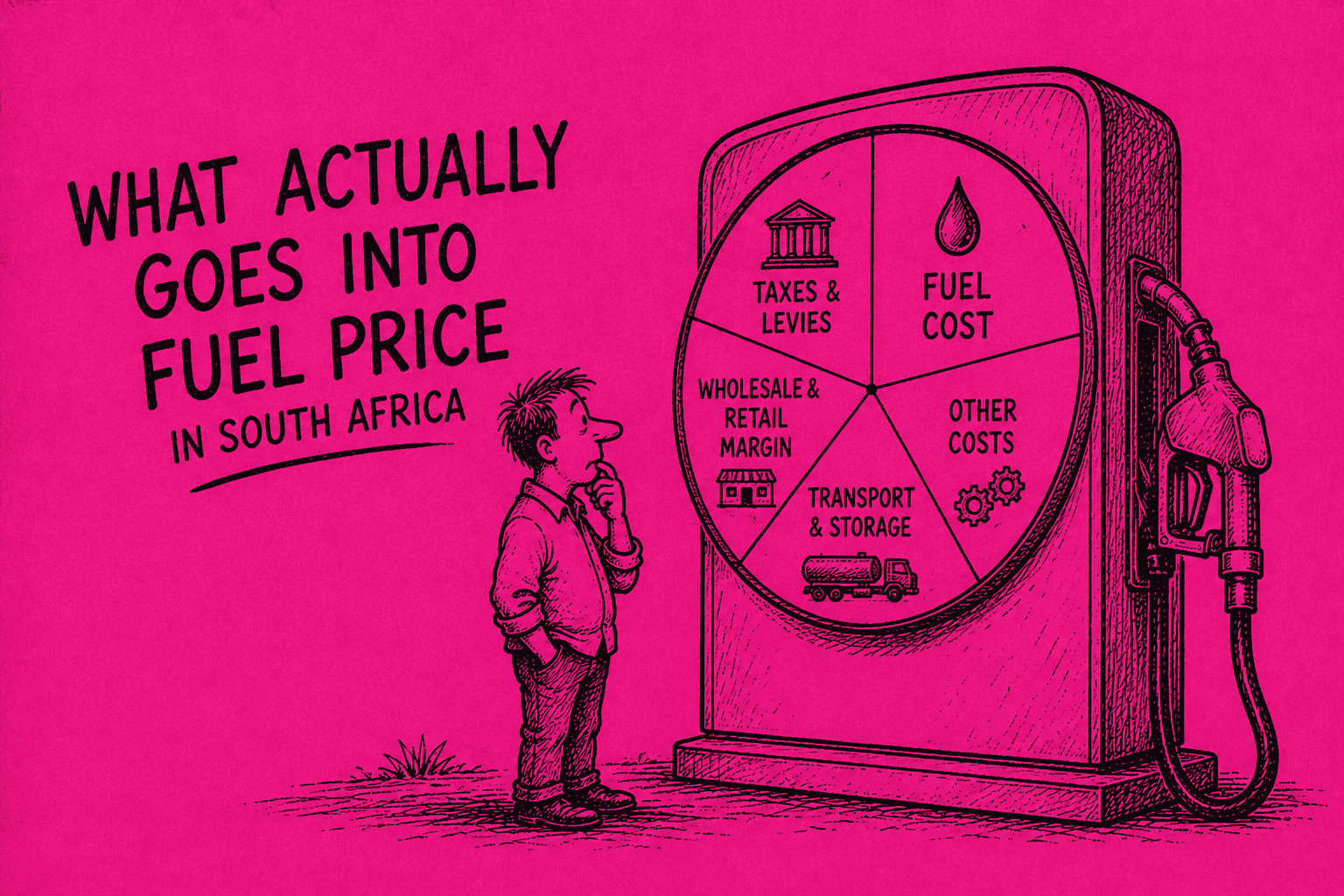
    40–60% International fuel cost and import parity calculations.
    25–40% Taxes, levies and statutory charges.
    10–20% Distribution, transport, storage and retail margins.

    Why the Rand Matters So Much

    This is where things become particularly interesting.

    Fuel is traded globally in US Dollars, which means South Africans are exposed to two powerful market forces simultaneously: the international fuel market and the Dollar-Rand exchange rate.

    In practice, a stronger Rand can help soften international price increases, while a weaker Rand can amplify them. It is one of the reasons fuel pricing discussions often involve economics, geopolitics and currency markets all at once.

    Then Come the Levies

    Once the international portion has been calculated, several domestic charges are added to arrive at the final regulated price.

    These include the General Fuel Levy, the Road Accident Fund levy, carbon-related charges, pipeline and storage costs, and various regulatory components that support the broader fuel supply chain.

    Collectively, these charges often account for roughly a third of the final pump price, although the exact proportion naturally shifts as global fuel prices rise and fall.

    Common Components of a Fuel Price

    • Basic Fuel Price (international fuel cost)
    • General Fuel Levy
    • Road Accident Fund Levy
    • Carbon-related charges
    • Pipeline and storage costs
    • Wholesale margins
    • Retail margins
    • Distribution and transport costs

    Interesting Fact

    South Africa does not adjust fuel prices every day. Instead, international fuel prices and exchange rates are monitored over a period before official monthly adjustments are made. This helps create a more predictable pricing environment for consumers and businesses.

    Why Inland Fuel Costs More Than Coastal Fuel

    Fuel has to travel.

    A litre sold inland has generally moved further through the country’s logistics network than a litre sold near coastal import infrastructure. Pipelines, storage depots, road transport and operational infrastructure all contribute to the final delivered cost.

    This is why fuel pricing includes transport-related differentials that help account for the cost of moving fuel across a country as geographically large as South Africa.

    The Part Most People Never Hear About

    Behind the scenes, South Africa also uses a balancing mechanism known as the Slate Account.

    Because international fuel prices move daily while local fuel prices are adjusted periodically, temporary under-recoveries and over-recoveries can occur. The Slate mechanism helps smooth these differences over time rather than allowing sudden shocks to flow directly into the market.

    So What Are You Actually Paying For?

    The number displayed on a fuel pump represents far more than the fuel itself.

    It reflects global energy markets, refining economics, international shipping, currency fluctuations, national infrastructure, transport logistics, wholesale and retail operations, as well as statutory levies that form part of South Africa’s fuel pricing framework.

    Understanding these components helps explain why fuel prices can move even when there appears to be no obvious event happening locally. A change in global demand, a movement in exchange rates, or shifts in international fuel markets can all eventually influence the price paid by South African consumers.

    Eli Masechaba Fuel Industry Business Specialist
    Wits Graduate
    In partnership with FuelZone
  • Your Strategy Is Fine. Your Thinking Is the Problem.

    Your Strategy Is Fine. Your Thinking Is the Problem.

    Business Development  |  Mindset & Coaching

    Your Strategy Is Fine. Your Thinking Is the Problem.

    Most struggling businesses do not have a strategy problem. They have a thinking problem. The plan exists. The market opportunity exists. The resources, more often than not, are available or accessible. What stands between where a business owner is today and where they want to be is rarely a missing piece of information. It is a set of deeply ingrained mental habits that quietly sabotage good decisions, block action, and keep capable people in cycles they do not fully understand.

    This is not motivational conjecture. It is what neuroscience and behavioural psychology have been documenting for decades — and it is what three decades of working with South African business owners has confirmed at close range.


    The Science of Why Smart People Get Stuck

    The human brain is not designed for optimal business decision-making. It is designed for survival. That distinction matters more than most people realise.

    Your brain runs on efficiency. It builds mental shortcuts — called cognitive schemas — that allow it to process familiar situations quickly without burning excessive energy. This is useful when navigating routine tasks. It becomes a liability when those shortcuts are built on old experiences, false assumptions, or environments that no longer exist. The brain applies yesterday’s logic to today’s problem, and calls it instinct.

    This is compounded by the way the brain responds to perceived threat. When a business decision carries significant risk — a new market, a large investment, a difficult conversation with a client or partner — the amygdala, the brain’s threat-detection centre, can trigger a stress response that narrows cognitive function. Research into how cortisol and adrenaline affect the prefrontal cortex — the part of the brain responsible for long-range planning and rational judgement — consistently shows that under moderate to high stress, the quality of complex decision-making deteriorates. Business owners operating in genuinely difficult environments are, physiologically, not thinking at their best precisely when clear thinking matters most.

    The brain applies yesterday’s logic to today’s problem, and calls it instinct.

    Add to this the well-documented phenomenon of loss aversion — established through decades of research in behavioural economics, most prominently by psychologists Daniel Kahneman and Amos Tversky — which shows that the psychological pain of losing something is roughly twice as powerful as the pleasure of gaining something of equivalent value. For business owners, this translates directly into a chronic bias toward avoiding risk over pursuing opportunity, even when the opportunity is objectively the better choice.

    None of this is character weakness. It is biology. The question is whether you are aware of it — and whether you have tools to work with it rather than against it.


    The Research That Changed How We Think About Thinking

    Three bodies of science underpin effective mindset coaching at the professional level. Understanding what they are — not just that they exist — is part of what makes the work credible.

    01
    Neuroplasticity
    Established Neuroscience

    The brain physically rewires itself in response to repeated thought patterns and behaviours. Neural pathways that are used frequently become stronger and faster. Those that are abandoned weaken over time. This is not metaphor — it is measurable structural change. It means that thinking habits are not fixed personality traits. They are modifiable, given the right conditions and consistent practice.

    02
    Fixed vs. Growth Mindset
    Carol Dweck — Stanford University

    Psychologist Carol Dweck’s decades of research demonstrated that people broadly hold one of two beliefs about their own abilities: that they are fixed and innate, or that they can be developed through effort and learning. Individuals with a growth mindset consistently outperform those with a fixed mindset in challenging, novel environments — not because they are more talented, but because they respond differently to failure, feedback, and difficulty.

    03
    Self-Efficacy Theory
    Albert Bandura — Stanford University

    Bandura’s research showed that a person’s belief in their own capacity to execute a specific task is one of the strongest predictors of whether they will attempt it, persist through difficulty, and ultimately succeed. Self-efficacy is not general confidence — it is task-specific, and it is built through structured experience, observation of others succeeding, and the quality of encouragement from credible sources. It is directly coachable.

    04
    Cognitive Behavioural Principles
    Clinical & Organisational Psychology

    The relationship between thoughts, emotions, and behaviours is not one-directional. Thought patterns drive emotional states, which drive behaviour — but the reverse is also true. Changing habitual thought patterns through structured challenge and reframing produces measurable changes in both the emotional response to situations and the quality of subsequent decisions. This is the practical mechanism behind most evidence-based coaching interventions.


    The Obstacles South African Business Owners Face Specifically

    Every market has its own texture. South Africa’s business environment is not generic, and the mindset obstacles that surface most consistently here reflect that. They are worth naming plainly.

    • 01
      Hypervigilance Disguised as Caution

      Operating in an environment of genuine instability — fluctuating energy supply, currency volatility, inconsistent policy — teaches the nervous system to stay on high alert. Over time, this appropriate response to real risk becomes an indiscriminate brake on all forward movement. Business owners become expert at identifying what could go wrong and increasingly unable to commit to what could go right. The threat response is stuck in the on position.

    • 02
      Learned Helplessness in Structural Adversity

      When external obstacles are repeatedly encountered and consistently outside one’s control — regulatory bureaucracy, access to finance, infrastructure failures — the brain draws a generalised conclusion: effort does not reliably produce outcomes. This is what psychologist Martin Seligman documented as learned helplessness. In a business context it presents as chronic procrastination, low initiative, and a persistent sense that the game is rigged. It is a rational response to irrational conditions — and it can be unlearned.

    • 03
      Isolation at the Top

      South African SME owners — across every sector and demographic — disproportionately carry strategic, operational, and personal pressures simultaneously and alone. The decision-making isolation of running a small or medium business compounds cognitive load and amplifies every bias listed above. Research on decision fatigue consistently shows that the quality of choices deteriorates as the volume of unresolved decisions accumulates. Most business owners are making their most important decisions at the bottom of their cognitive reserves.

    • 04
      Identity Fusion with the Business

      When a business owner’s self-worth is tightly fused with the performance of the business, every setback becomes a personal indictment. This is not merely uncomfortable — it is cognitively distorting. It makes objective analysis of problems nearly impossible, because what is required is the capacity to look at the business as a system separate from oneself. That separation is a cognitive skill that can be built. Without it, honest diagnosis is replaced by defensiveness.

    • 05
      Confirmation Bias in Strategy

      The brain has a well-documented tendency to seek, favour, and remember information that confirms existing beliefs while discounting contradictory evidence. In business strategy, this means that a flawed plan defended with conviction will consistently outcompete accurate market feedback in the business owner’s internal assessment. The business keeps doing what it has always done while interpreting the results as temporary. External perspective is the only reliable corrective.


    What Coaching Actually Does — And How

    Business coaching is not therapy, and it is not consulting. It occupies a specific and practical space between the two. A consultant analyses your situation and prescribes solutions. A therapist works with your history to understand the present. A coach works with your present thinking to change your future behaviour — grounded in where you are, focused on where you are going, and structured around accountability to the gap between the two.

    At the methodological level, effective coaching draws on the science described above. It works through four primary mechanisms.

    1
    Surfacing Hidden Assumptions

    Most limiting beliefs are invisible to their holder. The first function of structured coaching is to bring them into conscious awareness through disciplined questioning. You cannot challenge an assumption you do not know you are making. A skilled coach asks the question you have been asking yourself in a way that produces a different answer — not by providing the answer, but by changing the angle of enquiry.

    2
    Cognitive Reframing

    The same business situation can be accurately described in ways that produce completely different emotional and behavioural responses. A cash flow problem is a constraint, or it is a prioritisation problem, or it is evidence of a pricing model that needs revisiting. None of these reframes is false — but they produce different thinking and different actions. Reframing is not positive thinking. It is a deliberate cognitive tool for expanding the solution space.

    3
    Structured Accountability

    The research on implementation intentions — the specific plans people make about when, where, and how they will perform an action — consistently shows that the probability of follow-through roughly doubles when those intentions are stated to another person who will follow up. Accountability is not about pressure. It is about creating an external structure that compensates for the internal resistance that ambition alone cannot overcome.

    4
    Building Self-Efficacy Incrementally

    Confidence in a domain is not delivered — it is constructed through a sequence of designed experiences that progressively expand what you believe you are capable of doing. Effective coaching does not try to convince people they can do things. It designs the conditions under which they discover they can. The distinction matters enormously for how durable the change turns out to be.


    Thirty Years and a Wits Education Later

    Academic grounding at the University of the Witwatersrand provides a theoretical foundation. Thirty years of sitting across the table from South African business owners in every sector, size, and circumstance provides something the university cannot: the pattern recognition that only comes from volume and variety.

    After enough engagements, you stop being surprised by the specifics and start recognising the architecture underneath. The language changes. The industry changes. The scale changes. The core obstacles — the gap between intention and action, the distorted self-assessment, the decision paralysis at critical junctures — appear with remarkable consistency across all of it.

    What that experience produces is not a standard programme delivered uniformly. It produces a calibrated instinct for which intervention is likely to matter most, in which order, for which person — and what to stop doing when a different approach is called for. That is the value of genuine experience: not that it has all the answers, but that it has seen enough of the territory to know which questions to ask first.

    On Practical Honesty

    Coaching does not fix businesses. It improves the quality of thinking and behaviour of the person running the business. If the business has a structural problem — a broken cost model, a saturated market, a product that is genuinely not viable — better thinking will get you to that conclusion faster and more clearly, which is itself valuable. What coaching will not do is conjure opportunity where none exists. What it will do is ensure that you are not the obstacle standing between your business and the opportunity that does exist.


    Why Virtual Delivery Works — And Works Well

    There is a persistent assumption that coaching requires physical presence to be effective. The research does not support this. Numerous studies comparing outcomes across in-person and virtual coaching have found no statistically significant difference in coaching effectiveness between the two formats — provided the sessions are structured, consistent, and conducted with appropriate preparation on both sides.

    For South African business owners outside major urban centres, the practical barrier of travel has historically excluded access to quality professional development. Virtual delivery removes that barrier entirely. A business owner in Limpopo, the Northern Cape, or the Eastern Cape has access to the same quality of engagement as someone in Sandton — without the travel cost, the lost half-day, or the scheduling friction that causes most coaching relationships to lose momentum before they produce results.

    Sessions are conducted via video call, structured around your actual business priorities, and designed to be practically applicable within your current operating context. The work happens in the conversation. The change happens in the decisions and behaviours that follow.

    Based in Gauteng  |  Available Nationally

    Business coaching and consulting delivered virtually to South African business owners across every province.

    One-on-one coaching
    Strategy development
    Leadership development
    Virtual & flexible scheduling

    Is This for You?

    The honest answer is that business coaching is not for everyone, and it is worth saying so plainly. It requires a willingness to have your thinking examined and challenged. It requires showing up to sessions prepared to engage seriously rather than perform. And it requires a tolerance for the discomfort of discovering that some of what you have believed about your business, your market, or yourself is not quite accurate.

    If you are operating a business in South Africa, you are already demonstrating a level of resilience and commitment that most people do not. The question is not whether you are capable. The question is whether the thinking you are currently applying is calibrated to the business you are trying to build — or to the one you started with, in different conditions, under different pressures, with a different understanding of what was possible.

    That recalibration is what structured coaching exists to produce. It is not a quick fix. It is a methodical, science-backed process for closing the gap between where your business is and where your ability to run it can take it.

    About the Author Eli Masechaba is a business consultant and coach with academic grounding from the University of the Witwatersrand and thirty years of hands-on experience working with South African business owners across multiple sectors. Based in Gauteng, Eli works with clients nationally via structured virtual coaching and consulting engagements. Enquiries can be made through this website.
    Keywords: business coach South Africa  |  business consultant Gauteng  |  mindset coaching South Africa  |  online business coaching South Africa  |  virtual business coach  |  mindset obstacles business  |  business coaching Wits  |  growth mindset business owners  |  SME coaching South Africa  |  neuroplasticity business performance  |  cognitive behavioural coaching  |  business development South Africa
  • Not All Diesel Is the Same

    Not All Diesel Is the Same

    Fuel Knowledge  |  Educational Series

    Not All Diesel Is the Same

    Ask most people what diesel is and they will say something like “the stuff trucks use.” That is true. But it is also like saying wine is “the stuff you drink at weddings.” Technically correct. Completely useless if you are trying to buy the right one.

    In South Africa today, there are several distinct types of diesel in commercial circulation. They behave differently in engines, they carry different environmental footprints, they are priced differently, and putting the wrong one in the wrong engine can cost you serious money. This article explains what separates them — simply, honestly, and without the marketing spin.


    The Thing That Separates Most Diesels: Sulphur

    Before getting to the fuel types themselves, you need to understand one ingredient: sulphur. Almost everything that distinguishes mainstream diesel grades comes down to how much sulphur is left in the fuel after refining.

    Sulphur occurs naturally in crude oil. Removing it costs money — the more you take out, the more the refining process costs. For decades, nobody cared much. Then the consequences became impossible to ignore.

    When sulphur burns in a diesel engine, it produces sulphur dioxide (SO₂), which reacts with atmospheric moisture to form sulphuric acid — a primary component of acid rain. More immediately relevant to buyers: sulphur also poisons the catalytic converters and diesel particulate filters (DPFs) that modern engines use to clean their own exhaust. The cleaner the fuel, the longer those systems last. The dirtier the fuel, the faster they fail.

    Sulphur content is measured in ppm — parts per million. A lower number means a cleaner fuel.

    Sulphur Content by Diesel Grade — Parts Per Million (ppm)
    500ppm
    500 ppm
    Old SA standard
    50ppm
    50 ppm
    Current SA standard
    10ppm (ULSD)
    10 ppm
    Euro 5 / 6 spec
    Biodiesel B100
    <1 ppm
    Near-zero sulphur
    The scale here is not decorative — 500ppm contains fifty times more sulphur than 10ppm. South Africa moved from a 500ppm national standard to 50ppm around 2017 under revised SANS 342 specifications.

    The Main Types — What They Are & Where They Fit

    500ppm Diesel
    Legacy Grade

    The old South African standard. Still encountered at some rural depots and in legacy supply chains. Incompatible with modern DPF-equipped vehicles — it will block and degrade the filter in short order. Increasingly difficult to source as infrastructure upgrades. If someone is offering it cheaply, ask why they still have it.

    50ppm Diesel
    Current SA Standard

    South Africa’s prevailing commercial diesel grade under SANS 342. The default product at most bulk terminals and filling stations. Suits Euro 3 and Euro 4 engines — the majority of the country’s commercial fleet. Not quite clean enough for the latest Euro 6 designs, but the practical baseline for almost all bulk buyers in the market today.

    10ppm (ULSD)
    Ultra-Low Sulphur Diesel

    Required by Euro 5 and Euro 6 engine designs, including many newer European trucks and modern passenger bakkies increasingly common in South Africa. Available at select bulk terminals. Using 50ppm in a 10ppm-spec engine will not cause immediate failure — but it degrades after-treatment systems over time and can void manufacturer warranty.

    GTL Diesel
    Sasol / Gas-to-Liquid

    South Africa’s most distinctive diesel story. Sasol’s gas-to-liquid process converts coal and natural gas into a synthetic liquid fuel with ultra-low sulphur content, an excellent cetane rating, and very complete combustion characteristics. It performs well across a wide range of applications and carries a price premium that reflects its cleanliness. Not universally available at bulk collection points.

    Biodiesel
    B5 – B100 Blends

    Produced from vegetable oils or animal fats through a chemical process called transesterification. Sold in blends: B5 (5% biodiesel), B20 (20%), up to B100. B5 and B20 are generally compatible with unmodified diesel engines and produce meaningfully lower particulate emissions. Higher blends require engine and fuel system modifications. South Africa has limited production infrastructure — covered in the section below.


    Modern Use Cases in South Africa

    Theory is useful. What does the South African market actually run on day to day?

    Road Freight & Logistics

    The long-haul trucking sector — which carries the overwhelming majority of goods across South Africa’s road network — runs almost exclusively on 50ppm diesel. Most of the country’s heavy commercial vehicle fleet is Euro 3 or Euro 4 specification, both designed around this grade. Some newer fleet purchases have introduced Euro 5 vehicles that technically prefer 10ppm, but operators generally run them on 50ppm given supply availability, monitoring engine condition more carefully as a trade-off.

    Mining

    South Africa’s mining sector is one of the highest diesel consumers in the country. Surface operations typically run on 50ppm. Underground operations are a different story — ventilation and occupational health requirements in deep shafts are pushing some mines toward lower-sulphur and cleaner-burning options, including GTL diesel, where exhaust quality has direct air quality consequences for workers spending shifts underground.

    Agriculture

    Tractors, irrigation pumps, and harvesters typically run older engine designs with wide fuel tolerance. 50ppm is the agricultural standard. Farmers buying in bulk and storing on-farm care far more about supply reliability and price per litre than sulphur specification. Properly stored 50ppm diesel has good shelf life for seasonal agricultural applications.

    Passenger Vehicles & Light Commercial

    This is where specification friction is beginning to show. Modern diesel passenger vehicles and bakkies — across most major European and Japanese manufacturers — increasingly arrive in South Africa with Euro 5 or Euro 6 engines that specify 10ppm or cleaner. Running on 50ppm will not immediately damage the engine, but it shortens the service life of particulate filters and can trigger warning lights sooner than expected. This is a genuine and growing issue as newer models become more common in the local market.

    Quick Reference — Grade vs Application

    Application 500ppm 50ppm 10ppm B5 Blend GTL
    Older trucks / pre-Euro 3 ~
    Euro 4/5 trucks & bakkies ~
    Modern Euro 6 passenger cars ~ ~
    Agricultural / generators ~
    Underground mining equipment ~ ~

    ✓ Compatible   |   ~ Usable with caveats   |   ✗ Not recommended — risk of engine or after-treatment damage


    Looking Ahead: Biodiesel & the Road Not Yet Taken

    Biodiesel deserves its own honest conversation — separate from the optimism it tends to attract in global sustainability discussions, and separate from the dismissiveness it sometimes gets in return.

    In simple terms, biodiesel is diesel made from biological sources — vegetable oils such as soya, canola, or sunflower, waste cooking oil, or animal fats. Through a chemical process called transesterification, these fats are converted into a fuel that burns in diesel engines and produces significantly less sulphur, unburned carbon, and particulate matter than petroleum diesel.

    The chemistry is sound. Biodiesel blended at B5 or B20 is compatible with most unmodified diesel engines, reduces particulate emissions meaningfully, and in a closed-loop waste-oil supply chain, represents a genuinely lower-impact fuel option.

    The South African Reality

    South Africa has the agricultural base to produce biodiesel at scale — soya and sunflower crops particularly lend themselves to it. There have been policy frameworks, pilot projects, and earnest investment discussions over the past fifteen-plus years. The 2007 Biofuels Industrial Strategy set ambitious targets. Most of them were not met.

    The honest reasons are structural. South Africa’s fuel price regulation under the Petroleum Products Act makes it difficult for alternative fuels to compete economically without sustained subsidy. The capital cost of building biodiesel processing infrastructure is significant. And using agricultural land or food crops for fuel has real food-price implications in a country where food security is not an abstract concern — a tension that exists in every market that has tried this seriously, not just here.

    Biodiesel is not a failed technology. It is a technology that requires supply chain investment, policy consistency, and feedstock discipline to work at commercial scale. South Africa has the raw ingredients for all three. What it has lacked, so far, is the sustained conditions for them to combine.

    At a niche level — waste cooking oil collection networks, fleet operators running B20 blends for ESG compliance, small-scale local production — biodiesel has found quiet, practical footholds in South Africa. It is unlikely to displace petroleum diesel at scale in the near term. But as emissions regulations evolve, as sulphur specifications tighten on new vehicle imports, and as waste-oil feedstocks become better organised, the economics may shift in its favour.

    Watch the space. But watch it with your eyes open.


    The Practical Takeaway

    If you are buying bulk diesel in South Africa right now, 50ppm is your baseline. It suits the majority of the commercial fleet, it is the standard product at virtually every bulk terminal, and it is what your supplier will quote unless you specify otherwise.

    If you are operating modern Euro 5 or Euro 6 equipment — or taking delivery of new vehicles that specify ULSD — confirm 10ppm availability with your supplier before you commit to a supply arrangement. Not every depot carries it. The cost difference is real, but so is the warranty and after-treatment risk of running the wrong grade.

    If someone is offering you 500ppm diesel at a notable discount, ask why they still have it. The answer will tell you something useful.

    About the Author Eli Masechaba is a fuel industry business specialist with hands-on experience in bulk fuel trading, distribution logistics, and commercial fuel procurement across South Africa.
    Keywords: types of diesel South Africa  |  50ppm diesel vs 500ppm  |  ULSD ultra low sulphur diesel  |  biodiesel South Africa  |  GTL diesel Sasol  |  diesel grades explained  |  SANS 342 diesel standard  |  bulk diesel Free State  |  diesel engine fuel compatibility  |  Euro 5 diesel South Africa  |  B5 B20 biodiesel blends  |  10ppm diesel South Africa
  • What Happens When You Put the Wrong Fuel In Your Engine

    What Happens When You Put the Wrong Fuel In Your Engine

    The Science of Fuel Mixing — Eli Masechaba
    Fuel Science

    What Happens When You Put the Wrong Fuel In Your Engine

    A scientifically-grounded breakdown of three common fuel mixing mistakes — and why each one is expensive, predictable, and completely avoidable.

    Eli Masechaba  |  Fuel Industry Specialist

    Every year, thousands of drivers make a critical mistake at the pump. They grab the wrong nozzle, and within seconds, they’ve contaminated their engine with incompatible fuel. The consequences range from a rough idle to complete mechanical failure. What follows is the science behind three specific mistakes — what physically happens, why it happens, and why the damage is almost always irreversible.

    Scenario 01

    Petrol in a Diesel Engine

    The most common mistake. The most expensive consequence.

    5–30 minTime to failure
    R150kMax repair cost
    RarelyRecoverable

    A driver pulls in to refuel, distracted or unfamiliar with a rental diesel vehicle. They fill up with petrol. The tank now contains a mix of light, volatile gasoline molecules (C₅–C₁₀ carbon chains) sitting among heavy diesel molecules (C₁₂–C₂₀). These two fuels are fundamentally incompatible — not just in performance but in the physical laws they’re built around.

    The engine might start. It might idle for a few seconds. What follows next is mechanical destruction in slow motion.

    What Actually Happens Inside the Engine

    Compression Ignition Mismatch

    Diesel engines have no spark plugs. They compress air to roughly 500 psi, raising the temperature to around 500°C. Diesel (cetane rating ~45–55) is formulated to auto-ignite reliably at these conditions. Petrol (octane rating ~87–98) is deliberately engineered to resist auto-ignition — it’s designed to wait for a spark. In a diesel engine, petrol vaporises too rapidly and ignites either too early or in an uncontrolled surge, creating detonation: a violent, uncontrolled explosion that hammers the piston downward with 2–3× the normal force.

    Fuel System Destruction

    Diesel’s higher viscosity (2.0–4.5 mm²/s vs petrol’s 0.4–0.8 mm²/s) is not a trivial difference — it’s the basis for how high-pressure diesel pumps and injectors lubricate themselves. Petrol is thin and dry by comparison. When it flows through diesel injection components, it removes the lubricating film between metal surfaces. Pump internals score and seize. Injectors cavitate and erode. These precision components operate at pressures above 2,000 bar in modern common-rail systems. At those pressures, inadequate lubrication causes metal-to-metal failure in minutes.

    Piston, Rod, and Bearing Damage

    Detonation creates shock loading across the entire reciprocating assembly. Connecting rods bend. Piston crowns crack or melt. Cylinder walls score. Bearings — which depend on a thin hydrodynamic oil film to separate metal from metal — lose that film under the shock load and begin to wear metal-on-metal. Once this begins, it accelerates non-linearly. The engine seizes.

    Exhaust and Aftertreatment Failure

    Petrol burns hotter and faster than diesel. The exhaust system in a diesel engine — including the turbocharger turbine, the diesel oxidation catalyst, and the diesel particulate filter (DPF) — is not rated for petrol combustion temperatures or chemistry. The DPF melts or shatters. The turbo overspeeds. Exhaust manifolds crack. In some cases, the engine catches fire.

    Damage Assessment

    Repair CostR25,000 – R150,000+
    Failure Timeline5–30 minutes of driving
    Components at RiskFuel pump, injectors, pistons, con rods, rings, turbo, DPF
    Recoverable?Rarely. Usually requires full engine replacement.

    Scenario 02

    Diesel in a Petrol Engine

    The reverse mistake. Often recoverable — if you catch it in time.

    ImmediateTime to failure
    R40kMax repair cost
    UsuallyRecoverable

    The scenario flips: a petrol car gets filled with diesel. The fuel tank now contains diesel — long-chain hydrocarbons (C₁₂–C₂₀) designed to ignite under compression, not spark. The petrol engine turns over, but combustion either fails completely or sputters for a short distance before stalling.

    This mistake is less catastrophic than its inverse, but only if you don’t drive. Every kilometre of movement multiplies the damage.

    What Actually Happens Inside the Engine

    Spark Plug Failure to Ignite

    Petrol engines rely on spark plugs delivering 20,000–40,000 volts to ignite a precisely atomised fuel-air mixture. Diesel’s auto-ignition temperature is ~250°C (reached under compression), but its spark ignition threshold is substantially higher than petrol’s. The spark occurs — but the diesel molecules, with their longer carbon chains and different activation energy requirements, don’t break apart and combust reliably from a spark. The result is misfires, rough running, and a near-immediate stall.

    Injector and Fuel System Clogging

    Petrol injectors are calibrated for fuel with viscosity around 0.4–0.8 mm²/s. Diesel is 5–10× thicker. It clogs injector nozzles (openings of ~0.5mm), disrupts fuel spray patterns, and overpressurises the fuel rail. The fuel pump strains against the increased resistance. Even if the engine starts briefly, the fuel delivery system is compromised within minutes.

    Crankcase Contamination

    Unburned diesel accumulates in the combustion chamber and blows past the piston rings into the crankcase. Diesel is a hydrocarbon solvent. Once it mixes with engine oil, it reduces the oil’s viscosity significantly — turning a 5W-30 oil into something closer to water. The hydrodynamic oil film that keeps bearings, camshafts, and cylinder walls separated from metal contact collapses. The bearings begin to fail. This process takes hours, not weeks.

    Carbon and Gum Deposits

    The diesel that does partially combust (poorly and incompletely) leaves thick gummy carbon deposits on intake valves, injector tips, and combustion chamber walls. These deposits are insulative, which further impairs ignition. They also trap heat, promote pre-ignition, and — over time — cause valve sealing failure. It’s a self-reinforcing degradation loop.

    Damage Assessment

    Repair CostR8,000 – R40,000
    Failure TimelineWon’t start, or stalls within 1–5 km
    Components at RiskInjectors, spark plugs, fuel pump, bearings, rings
    Recoverable?Yes — if caught before driving. Full fuel drain + oil change usually restores function.

    Scenario 03

    Paraffin in a Diesel Engine

    The sneaky one. It runs. You’ll think you’re fine. You’re not.

    10–2000kmTime to failure
    R30kMax repair cost
    MaybeRecoverable

    In South Africa and across Southern Africa, paraffin (kerosene) is a common household fuel sold at many outlets — and at a glance, it looks almost identical to diesel. Same pale yellowish colour. Same liquid consistency. Different molecular architecture, different cetane rating, different consequences.

    This mistake is the most deceptive of the three. The engine starts. Performance feels roughly normal for the first few kilometres. Then, progressively and invisibly, the damage mounts. By the time a driver notices something is wrong, the engine components are already compromised.

    What Actually Happens Inside the Engine

    Low Cetane Number Causes Ignition Delay

    Diesel’s cetane number sits between 45 and 55. Paraffin (kerosene) has a cetane number of approximately 23–35 — significantly lower. The cetane number quantifies how quickly a fuel auto-ignites after being injected into the compressed air charge. A lower cetane number means ignition delay: the fuel sits in the combustion chamber, mixes, and accumulates before finally igniting — all at once, late in the stroke. This is the seed of every downstream problem.

    Late Detonation and Mechanical Stress

    When accumulated fuel finally ignites late (after top dead centre), the pressure spike is sharp and off-cycle. The piston is already moving downward when the explosion hits. This creates mechanical shock loads on the connecting rod, crankshaft bearings, and piston pin. The stress is less violent than the petrol-in-diesel scenario but occurs every single combustion cycle. Over thousands of cycles, the cumulative fatigue damage to bearings, piston rings, and cylinder walls is severe.

    Injector Erosion from Low Lubricity

    Diesel fuel contains natural lubricity agents that protect the fuel injection pump and injector internals. Paraffin has markedly lower lubricity. High-pressure injection systems (some operating above 2,000 bar in modern common-rail diesels) rely on the fuel itself as a lubricant for the pump internals and injector control valves. Without sufficient lubricity, these components erode. Spray patterns deteriorate. Fuel delivery becomes uneven. Incomplete combustion follows.

    DPF Clogging and Exhaust Damage

    Incomplete combustion from poor ignition quality floods the exhaust stream with unburned hydrocarbons and soot. The diesel particulate filter (DPF) — designed to trap soot over thousands of kilometres and regenerate periodically — gets overwhelmed. It clogs prematurely, triggering warning lights, reducing backpressure tolerance, and eventually cracking under thermal stress during regeneration attempts. DPF replacement alone costs R8,000–R20,000.

    Fuel System Seal Degradation

    Paraffin has a lower flash point and higher volatility than diesel. In the fuel lines, feed pump, and high-pressure side, this manifests as vapour bubble formation (cavitation). The rubber seals and O-rings throughout the diesel fuel system are formulated for diesel’s specific chemical composition. Paraffin’s different solvent properties cause swelling and softening of these seals over time, leading to fuel leaks — both dangerous and expensive to trace and repair.

    Damage Assessment

    Repair CostR5,000 – R30,000
    Failure TimelineGradual: 10 km to 2,000 km before full failure
    Components at RiskFuel pump, injectors, DPF, bearings, seals
    Recoverable?Yes if caught early (<50 km). Later detection = costly partial rebuilds.

    The Three Mistakes at a Glance

    Scenario Primary Failure Mode Failure Speed Typical Cost Recoverable?
    Petrol in Diesel Detonation, fuel pump erosion, piston/rod damage 5–30 minutes R25k–R150k Rarely
    Diesel in Petrol No spark ignition, clogged injectors, bearing corrosion Immediate to 5 km R8k–R40k Yes (if caught early)
    Paraffin in Diesel Low cetane delay, detonation, DPF clogging 10–2,000 km R5k–R30k Maybe (time-dependent)

    The Chemistry in Plain Terms

    Petrol, diesel, and paraffin are not interchangeable grades of the same product. They are fundamentally different fuels with different molecular structures, designed for different ignition systems, and incompatible at every level of engine engineering.

    • Petrol C₅–C₁₀ Short-chain hydrocarbons. High octane. Resists auto-ignition. Requires spark. Low viscosity, low lubricity.
    • Diesel C₁₂–C₂₀ Long-chain hydrocarbons. High cetane. Auto-ignites under compression. High viscosity, high lubricity. Contains lubricity additives.
    • Paraffin C₁₀–C₁₄ Intermediate hydrocarbons. Low cetane (~23–35). Lower lubricity than diesel. Household/heating fuel — not engineered for injection systems or compression cycles.

    Every failure described in this article flows directly from violating these properties. The engine doesn’t “cope” with the wrong fuel. It fails — sometimes slowly, sometimes immediately, but always expensively.

    When in Doubt, Ask.

    A two-second check inside the fuel door or a question to the attendant costs nothing. The wrong fuel costs anywhere from R5,000 to an engine replacement. Turn off the engine immediately if you suspect misfuelling, and arrange a tow — not a test drive.

    Eli Masechaba  |  Fuel Industry Specialist  |  South Africa