
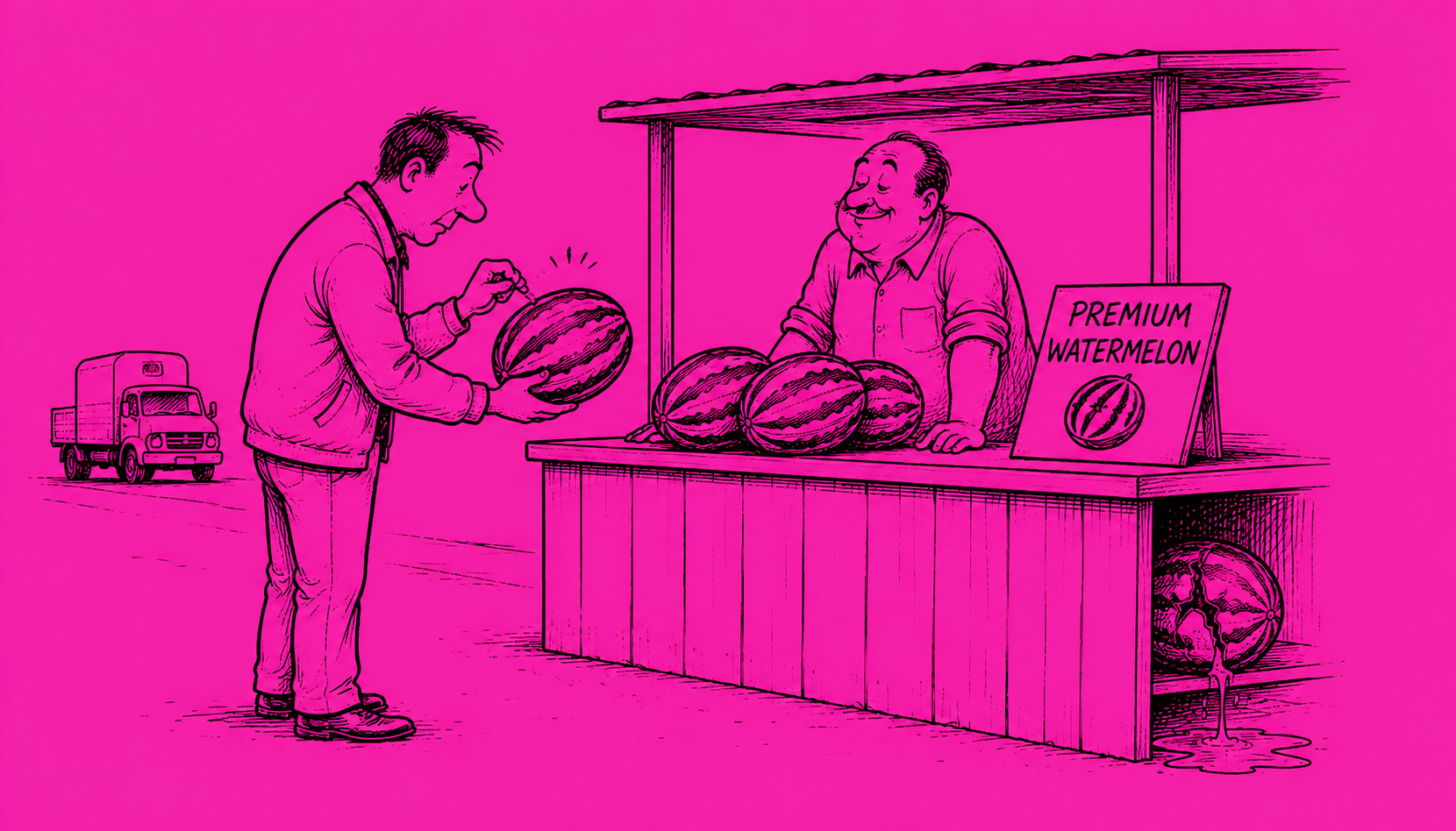
How to Spot a Fuel Scam: Red Flags When Buying Wholesale Diesel in South Africa
Bulk fuel is one of the biggest line items on any commercial budget — which is exactly why it attracts slick operators who look legitimate right up until your money clears and they disappear. Here’s how to make sure that never happens to you.
If you run a fleet, a farm, a mine, or any operation that burns through serious volumes of diesel, you already know that fuel is not a small expense you can be casual about. It’s often one of the largest recurring costs on the entire balance sheet. That size is exactly what makes it attractive to fraudsters. A convincing broker with a professional email signature, a plausible story, and a price that sounds like a genuine win doesn’t need to fool you for long — just long enough for a deposit or an upfront payment to clear. They rely on one thing above all else: that fuel pricing looks complicated enough from the outside that you won’t know what “too good to be true” actually looks like. This article gives you the unwritten rules of the industry, so you never have to find out the hard way.
A broker you’ve never dealt with contacts you out of the blue — email, WhatsApp, a cold call — offering wholesale diesel at a price that seems almost impossible. Not a small saving. A dramatic one. Several rand below what you know the market rate to be, framed as a special allocation, a distressed cargo, a connection at a terminal, or some variation of “I can get this for you, but only right now.”
“I’ve got access to a batch at R3 below the current wholesale price — but I need confirmation today, the seller is under pressure to move it fast.”
South Africa’s fuel pricing is regulated, and the Basic Fuel Price (BFP) — calculated monthly by the DMRE — sets the floor beneath which legitimate fuel simply cannot be sold without someone taking a loss nobody is willing to absorb. Wholesale margins in this industry are thin by design; they are set through a regulated framework, not through relationship-based haggling. Nobody in the legitimate fuel trade has a “secret stash” of cheap diesel sitting around waiting for a stranger’s phone call. If the price you’re being offered sits meaningfully below the prevailing BFP-linked wholesale rate, there are really only two explanations, and neither is good news for you.
The moment you show interest, the pressure escalates. You’re told the stock is limited, other buyers are circling, and the only way to “lock it in” is a 100% upfront payment — often by EFT into an account that has no obvious connection to a recognisable fuel company, sometimes even a personal account “for speed.” The urgency is the entire mechanism: they need your decision-making brain to switch off before your due diligence brain switches on.
“I can only hold this allocation for the next two hours — I need the full payment now to secure it before someone else takes it.”
Legitimate wholesale fuel suppliers operate through secured, verifiable commercial banking arrangements tied to a registered company with a real trading history. They do not need to manufacture urgency, because they are not worried about losing your business to a phantom competing buyer — they have actual product, actual infrastructure, and an actual pipeline of clients who found them through reputation rather than a cold approach. A legitimate supplier’s confidence comes from having something real to sell. A scammer’s urgency comes from needing your money to clear before you have time to think. High-pressure sales tactics — the kind you’d expect from a dodgy used-car lot, not a commercial fuel transaction — are themselves the red flag, independent of anything else in the deal.
You ask, reasonably, for proof: the wholesale petroleum licence issued under the Petroleum Products Act, the company’s CIPC registration, or basic evidence that this is a real, operating fuel business. What comes back is a string of excuses — “our compliance officer is on leave,” “I’ll send it once we’ve confirmed the order,” a blurry screenshot that’s impossible to verify, or a document that turns out to be expired, altered, or belonging to a completely different entity.
“Don’t worry about the paperwork, we deal with dozens of clients — I’ll email the licence through after the payment goes off.”
Wholesale distribution of petroleum products in South Africa requires a licence issued by the DMRE under the Petroleum Products Act. This is not optional paperwork — it is the legal foundation that allows a company to buy and sell fuel at wholesale level at all. A legitimate operator produces this without hesitation, because it’s core to how they prove themselves to every serious client, every time. If a supplier cannot produce a current, verifiable wholesale licence and a checkable company registration, you are not looking at a paperwork delay. You are looking at a company that most likely does not have the legal standing to sell you fuel in the first place — which means you have no protection if the deal goes wrong, and quite possibly no real fuel coming at all. If you cannot independently verify who you’re dealing with, you are gambling with your fleet’s engines and your company’s money in the same roll of the dice.
Why Serious Buyers Work With Eli Masechaba & FuelZone
The easiest way to avoid a fuel scammer is to stop looking for “backdoor deals” altogether — and start working with verified industry players from day one. When you buy your fuel through Eli Masechaba, in partnership with FuelZone, you aren’t just buying litres. You’re buying decades of corporate integrity behind every delivery.
No ghost operations, no unverifiable middlemen, no mystery bank accounts. FuelZone operates as a fully compliant, verified fuel wholesaler. Every litre of diesel, petrol, or paraffin that moves through the supply chain is tracked, legally sourced, and unadulterated — exactly the product specification you’re paying for, with nothing added and nothing missing.
Eli Masechaba is a Wits Business School graduate and a fuel industry specialist with decades of hands-on corporate experience in exactly this sector. She exists as the filter between you and the complexity — so instead of decoding pricing grids and delivery jargon on your own, you get straight answers, transparent pricing, and delivery logistics explained clearly before you ever commit to an order.
Every invoice is generated from a real terminal, on the actual date your fuel is loaded — the same follow-the-molecule principle covered in our pricing articles. That means your paper trail is real, your compliance position is solid, and there is never a moment where you’re left wondering whether the transaction you just completed actually happened the way you were told it did.