
The Carbon Tax on Fuel, Explained
It’s not the General Fuel Levy. It’s not the RAF Levy. It’s a third, separate charge — and from January 2026 it’s climbing faster than either of them. Here’s what it actually is, and why every SME should be watching it.
Most business owners I speak to can rattle off the fuel levy and the RAF levy without blinking — they’ve been arguing about those two for years. Ask about the carbon fuel levy, and the room goes quiet. That’s a problem, because it’s the one component of your pump price that’s currently rising the fastest, and it’s tied to a piece of legislation most SMEs have never read a single line of: the Carbon Tax Act.
A Different Animal Entirely
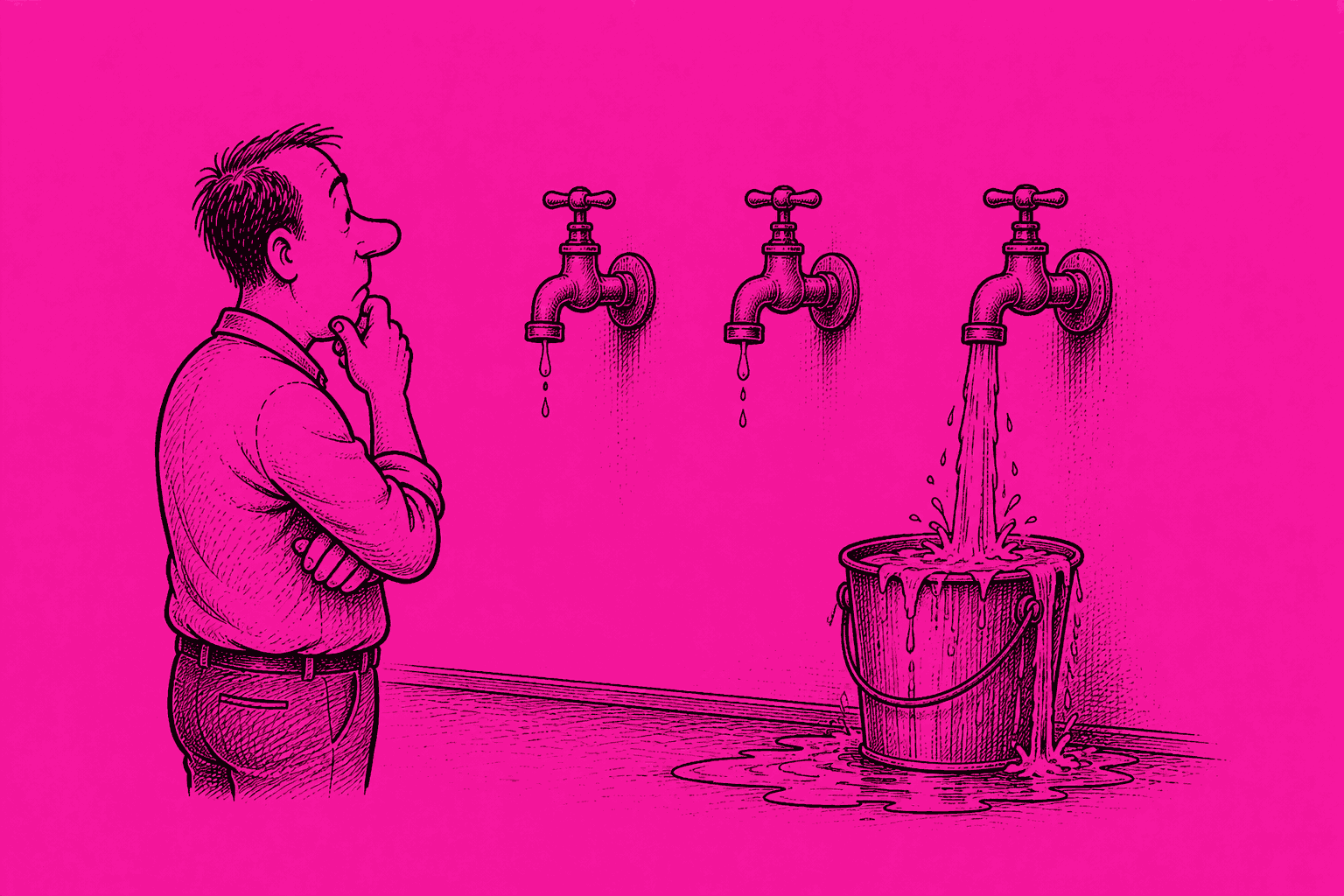
Same fuel price, three unrelated charges.
The fuel levy pays for general government spending. The RAF levy pays for road accident claims. The carbon levy doesn’t fund anything specific — it exists purely to make polluting more expensive, and it flows from a completely different law.
The Carbon Tax Act became law in 2019, built on a simple “polluter pays” idea: put a Rand price on every tonne of carbon dioxide equivalent a business emits, and that price signal should nudge companies toward cleaner operations over time. It sits under the National Treasury and SARS, administered separately from the fuel-price formula that the Department of Mineral and Petroleum Resources announces every month.
The carbon tax doesn’t hit consumers directly at first. It’s charged to large emitters — heavy industry, power generation, big fuel combustion operations. But a slice of it is deliberately passed through into the price of petrol and diesel as a distinct line item called the carbon fuel levy. That’s the part that lands on every fill-up, whether you run a five-truck logistics outfit or a single delivery bakkie.
General Fuel Levy (GFL)
The largest component by far — set at R4.10/litre for petrol and R3.93/litre for diesel following the 2026 Budget. It’s a general revenue tax with no earmarked purpose, adjusted most years in line with the Budget Speech.
Road Accident Fund (RAF) Levy
Set at R2.25/litre on both fuels after the 2026 increase — the first change to this component since the 2021/22 financial year. It exists to fund RAF claims for road accident victims.
Carbon Fuel Levy
The smallest line item in cents-per-litre terms, but the one moving on its own separate clock. It rose by 5c/litre for petrol and 6c/litre for diesel from 1 April 2026, specifically because the underlying carbon tax rate jumped from R236 to R308 per tonne of CO₂e that January. Treasury has floated separating this levy out entirely into its own line on the fuel price schedule once SARS systems allow — a sign of how seriously it’s now being treated.
Worth Noting
The temporary R3/litre general fuel levy relief that ran through parts of 2026 to soften pump-price pain applied to the general fuel levy — not the carbon component. The carbon levy kept climbing regardless. That’s a useful test for whether you actually understand which charge is which.
Why 2026 Is the Turning Point
The grace period for big polluters just ended.
Government gave large emitters roughly six years of generous discounts to get their house in order. That discount window has now closed, and the numbers are moving to reflect it.
When the Carbon Tax Act launched in 2019, Phase 1 was deliberately soft. Big emitters could claim tax-free allowances — for trade exposure, performance, carbon budgets, offsets — that stacked up to as much as 95% relief in some cases. The effective amount actually paid was small by design, giving industry years to adapt before the real cost landed.
Phase 1 was meant to end in 2022, got extended to 31 December 2025, and Phase 2 has now begun — running from 1 January 2026 through to 31 December 2030. The allowances shrink. The rate accelerates. R236 per tonne became R308 per tonne overnight on 1 January 2026, and Treasury’s published trajectory points toward a rate in the region of R462 per tonne by 2030, with a punitive rate reserved for emitters who blow through their mandatory carbon budgets. That escalation is what’s now filtering into the carbon fuel levy every time the Budget Speech touches fuel prices.
Who Actually Pays — and How SMEs Feel It
You’re probably not the direct taxpayer. You’re still footing part of the bill.
Unless you’re running a large industrial facility or generation plant, SARS isn’t sending you a carbon tax bill directly. But the cost doesn’t disappear — it moves through fuel, freight, and eventually electricity, and lands in your overheads anyway.
Direct carbon taxpayers are, for the most part, large-scale emitters: heavy industry, mining, big thermal fuel combustion, and — increasingly, as inclusion widens — power generation. Most South African SMEs will never file a carbon tax return. That’s precisely why the topic gets ignored at SME level: it feels like someone else’s tax.
But the pass-through is real and it’s structural, not incidental. Every litre of diesel your delivery fleet burns already carries the carbon fuel levy. Every supplier whose input costs include heavy fuel or grid electricity is quietly building their own carbon exposure into what they charge you. And as Eskom’s inclusion under the carbon tax framework moves closer, that pressure extends into electricity pricing too — on top of the load shedding cost planning most SA businesses are already doing. None of this shows up as a line item called “carbon tax” on your own invoices. It shows up as fuel, freight, and input costs that creep upward slightly faster than headline inflation would suggest.
If You Run Backup Power or High-Volume Fleet
If your business relies heavily on diesel generators for load shedding resilience, or runs a sizeable delivery or logistics fleet, it’s worth checking — with your accountant or tax advisor — whether your fuel combustion volumes could ever put you near SARS’s direct carbon tax registration thresholds as you scale. Most SMEs sit comfortably below them. Growing industrial or logistics operations shouldn’t assume that forever.
The Bottom Line
The carbon tax on fuel isn’t a rebrand of the levies you already know — it’s a separate piece of climate policy with its own legal basis, its own escalation schedule, and its own political momentum behind it. Phase 2 means the rate that was a rounding error in 2019 is now a genuine cost driver, and it’s set to keep rising in real terms through 2030.
For most SME owners, the practical takeaway isn’t “go register for carbon tax” — it’s “stop treating fuel and logistics cost increases as random.” A meaningful chunk of the creep in your fuel and freight line items over the next five years has a name, a legislated schedule, and a predictable direction: up. Build that into how you budget and price, rather than reacting to it line by line every time the Budget Speech lands.
This is exactly the kind of hidden structural cost that catches SMEs off guard — not because the information is secret, but because it’s buried in tax legislation nobody outside corporate finance departments reads. Understanding it early is a governance advantage, not just a compliance one.