
From Tehran to the Tshwane Till
How global geopolitical crises dictate South African fuel prices — and why a drone strike on a refinery thousands of kilometres away can change what you pay at your local forecourt within days.
There’s a particular kind of frustration in watching the news — a story about a conflict in the Middle East, a tanker incident in a distant strait, a drone strike on a refinery you’d never heard of — and then, days later, seeing the price at your local Vanderbijlpark forecourt jump. It feels disconnected. It isn’t. South Africa sits thousands of kilometres from most of the world’s major oil-producing regions, and yet its fuel price is one of the most globally interconnected numbers in the entire economy. This is the mechanism behind that connection, explained properly.
The Global Butterfly Effect
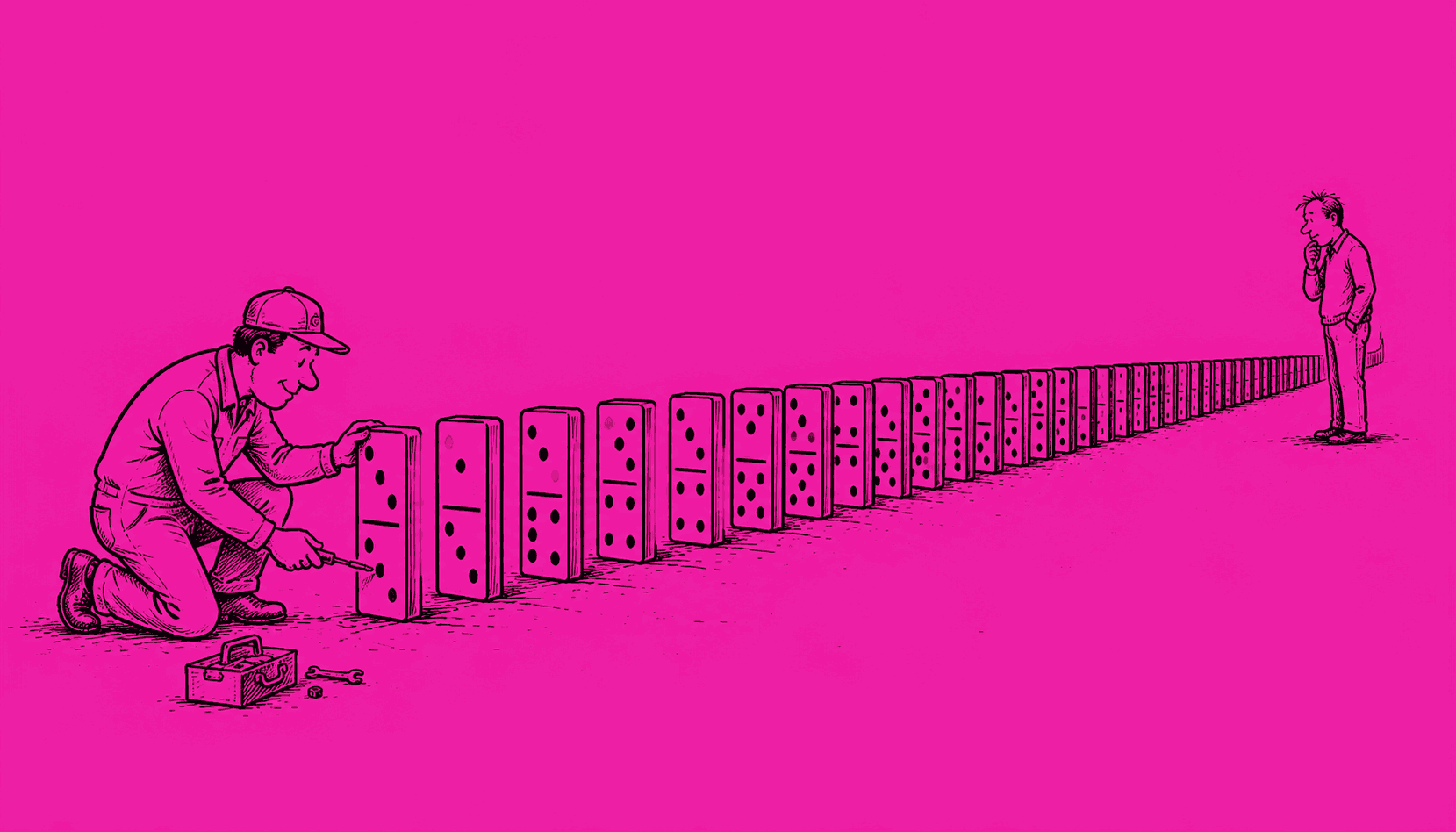
A single event, thousands of kilometres away, and a South African motorist pays for it within days.
Here’s the uncomfortable truth about South Africa’s fuel price: it doesn’t really care what’s happening domestically nearly as much as people assume. A calm, stable month at home does very little to protect you if a geopolitical shock ripples through the global oil market. The country’s exposure to international conflict isn’t abstract or indirect — it runs through a handful of very concrete mechanisms, each of which transmits global chaos into your pocket with remarkable speed.
The Basic Fuel Price — A Mirror, Not a Guess
South Africa doesn’t invent its fuel price. It reflects the global market back at you, almost in real time.
South Africa’s domestic refining capacity has shrunk substantially over the past two decades — several major refineries have closed or scaled back operations. The practical consequence is that the country now imports the vast majority of its refined petroleum products rather than processing crude oil domestically at the scale it once did. This is the foundation of a pricing principle called import parity, covered in more technical depth in our earlier pricing articles.
Under import parity, South Africa’s regulated Basic Fuel Price (BFP) is calculated as though every litre of fuel sold locally had been imported from international markets — because, in practice, most of it effectively has been, or would need to be if domestic supply fell short. The BFP isn’t a number the government simply decides on. It’s a formula that mirrors the actual cost of buying fuel internationally, insuring it for transport, and shipping it to South African shores.
Why This Makes South Africa So Sensitive to International Risk
When international risk rises — a regional conflict, a threat to a major shipping route, an attack on oil infrastructure — two things happen almost simultaneously in the global market. First, the benchmark price of crude oil itself moves upward as traders price in supply uncertainty. Second, and less obviously to most consumers, marine insurance premiums for vessels transiting risky waters increase sharply — sometimes dramatically, within days of an escalation. Because the BFP formula explicitly includes freight and insurance costs, both of these effects flow directly into South Africa’s fuel price calculation. The BFP acts like a mirror — it doesn’t create the price shock, it faithfully reflects one that’s already happening thousands of kilometres away.
The Strait of Hormuz & Chokepoint Economics
Some stretches of ocean carry a wildly disproportionate share of the world’s oil. When they’re threatened, the whole system feels it.
The global oil trade depends heavily on a small number of narrow maritime passages — chokepoints — through which a hugely disproportionate volume of the world’s oil supply must physically pass. The most frequently cited example is the Strait of Hormuz, the narrow waterway between Iran and the Arabian Peninsula, through which roughly a fifth of the world’s total oil consumption transits on any given day. There is no meaningful alternative route for much of this volume — geography simply doesn’t offer one.
When a chokepoint like this becomes threatened — through military conflict, the risk of mining, or direct attacks on shipping — oil companies and insurers face an immediate, practical problem: continuing to send tankers through the danger zone, or reroute them entirely.
When a chokepoint becomes too dangerous to risk, tankers are often forced to reroute around the entire African continent via the Cape of Good Hope — precisely the waters South Africa itself sits beside. This adds significant extra days to every affected voyage, burns dramatically more fuel per shipment, and effectively removes those vessels from active global circulation for longer. Fewer tankers delivering oil on schedule means less effective supply reaching the market at any given moment — and reduced available supply is one of the most reliable ways to drive international Brent Crude prices upward almost instantly, regardless of what’s happening with actual underground reserves.
The Uncomfortable Irony for South Africa
There’s a particular irony worth sitting with here: when Middle Eastern chokepoints become too risky, some of that rerouted shipping traffic passes directly along South Africa’s own coastline. The country that gets hit with higher fuel prices from the disruption is, at the very same time, hosting part of the detour that’s causing the price increase in the first place. Proximity to the rerouted shipping lanes offers South Africa no pricing benefit whatsoever — the cost impact is global and mirrored locally through the BFP, regardless of geography.
The Double-Whammy: The Dollar and the Rand
A global crisis doesn’t just make oil more expensive. It makes the currency you’re buying it with weaker at exactly the same time.
Oil is priced and traded globally in US Dollars — a structural feature of the international energy market sometimes referred to as the “petrodollar” system. This means every barrel South Africa imports must ultimately be paid for in dollars, regardless of what’s happening with the rand. That single fact sets up a painful mechanism during any global crisis.
During periods of global uncertainty, international investors instinctively move capital toward assets perceived as safe — and the US Dollar is one of the primary global safe-haven currencies. This flight to safety increases demand for dollars, strengthening the currency precisely when crude oil itself is also becoming more expensive in dollar terms.
Emerging market currencies — the South African Rand very much included — typically move in the opposite direction during the same global risk-off events. Investors pull capital out of perceived higher-risk markets, and the rand depreciates against the dollar at almost exactly the moment South Africa needs dollars the most to pay for its fuel imports.
The result is a genuine double-blow, and it compounds rather than simply adding up. South Africa isn’t just paying more for oil in dollar terms — it’s paying for that more expensive oil using a currency that has simultaneously become weaker. A crisis that pushes Brent Crude up by a given percentage, combined with a rand that weakens by a further margin at the same time, produces a fuel price impact considerably larger than either factor would create on its own. This is precisely why South African fuel price increases during global crises can feel disproportionate to the headline oil price move you read about in international news — because the currency effect is happening in the background, compounding the damage.
Why Partnering With a Strategic Wholesaler Matters
When global markets are volatile, prices can change overnight, and local supply gets tight in exactly the moments you can least afford disruption. Bulk buyers simply cannot afford to be working with unreliable brokers when a crisis hits. What you need is a partner with genuine corporate logistics experience, transparent pricing grids, and direct terminal access — someone who understands the macro-economics keeping your trucks on the road, not just the price on today’s invoice.
Decades of hands-on exposure to how South African fuel supply actually behaves under pressure — from currency shocks to chokepoint disruptions — means fewer surprises and faster, more informed decisions when conditions shift quickly.
No guessing games about what’s driving a price change. When the BFP moves because of a global event, you get a clear explanation grounded in the actual mechanics covered in this article — not vague excuses.
A verified, licensed wholesale relationship means your supply isn’t dependent on a chain of unverifiable middlemen who may simply disappear the moment sourcing becomes difficult or margins get tight during a volatile period.
By partnering with Eli Masechaba, in association with FuelZone, you secure your supply chain against exactly these global shocks — with a verified, stable partner who understands both the macro-economics driving your fuel costs and the practical realities of keeping your trucks, fleet, or operation running when international headlines start affecting your bottom line.